Break the Curse, Escape the Mansion
Game Overview
Cursebreakers is a first-person multiplayer horror game where players explore a procedurally generated haunted manor, solving puzzles and gathering tools to break a supernatural curse. Midway through each match, the game shifts, with one player transforming into the Curse Host, gaining powers to hunt the others. With objectives revealed and roles redefined, players must quickly adapt, complete their goals, and escape before the curse overwhelms them.
- Genre: Online Co-op Horror / “Friendslop”
- Core Fantasy: Work together to survive a haunted mansion, until trust shatters and one player turns against their friends.
- Design Pillars:
- Tension – Constant uncertainty as players anticipate when and how the game will turn against them.
- Unpredictability – Procedural layouts, randomized objectives, and roles that change mid-game ensures that no two matches play the same.
- Cooperation to Conflict – Players must collaborate to survive, then rapidly adapt when one becomes the enemy.
Development
Cursebreakers is currently in active development. If you would like to learn more about my role in the project, read on below! But note that all images and videos below are from a project that is in development and subject to change.
As the project’s Lead Gameplay and Systems Designer, I was responsible for establishing core systems, designing various room types to be generated within the mansion, prototyping and iterating on systems based on player feedback, fine-tuning various values, and maintaining the design document.
As the lead designer, I was responsible for establishing the following systems:
Core Game Loop
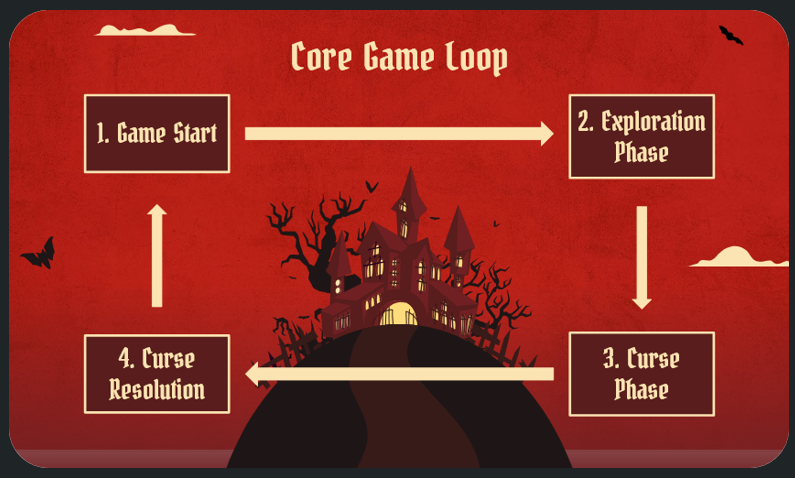
1. Game Start
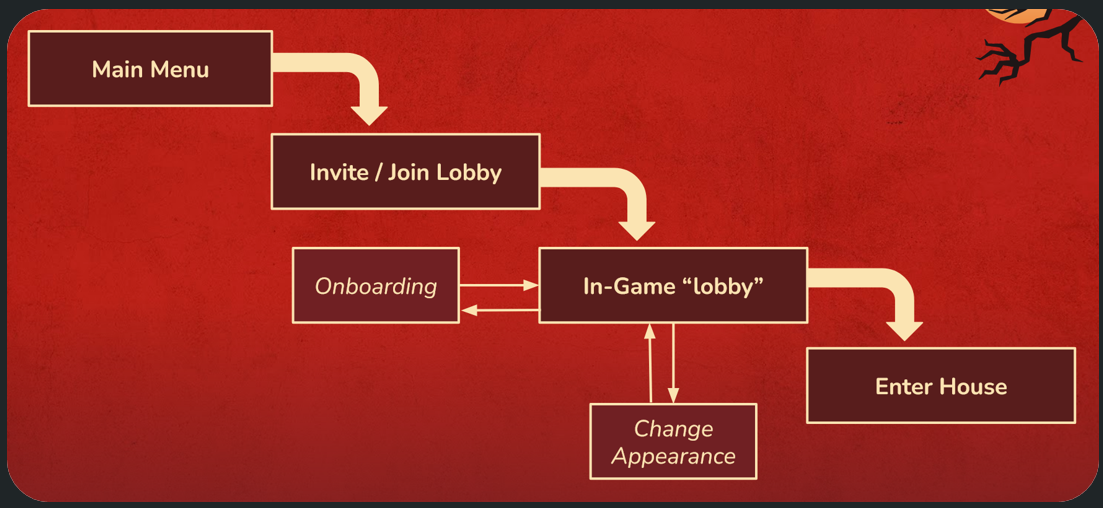
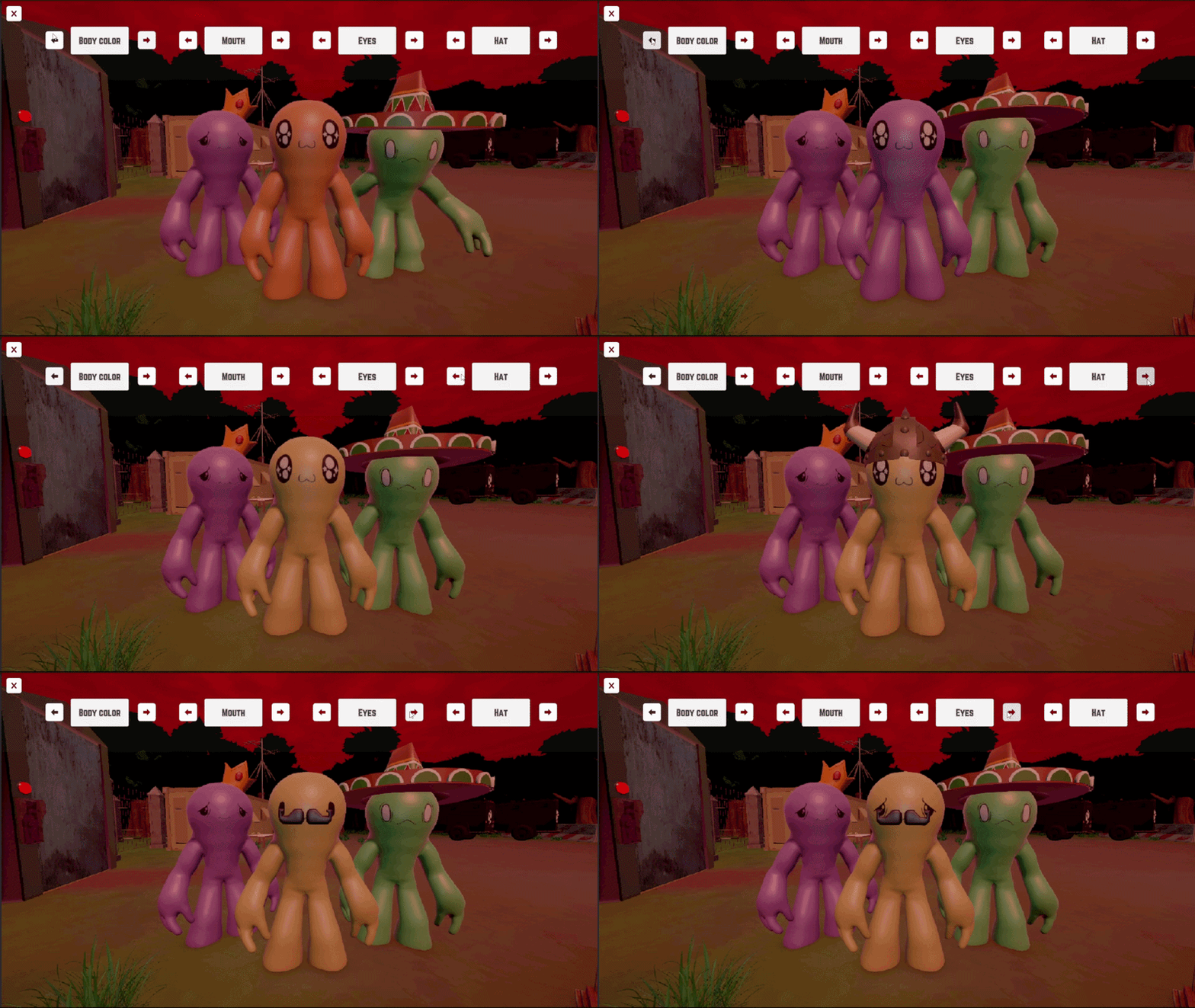
The game features an in-game lobby that allows players to create or join sessions, customize their characters, and view the player tutorial. The lobby is laid out with a few secret areas built to establish the game’s theme and story.
2. Exploration Phase

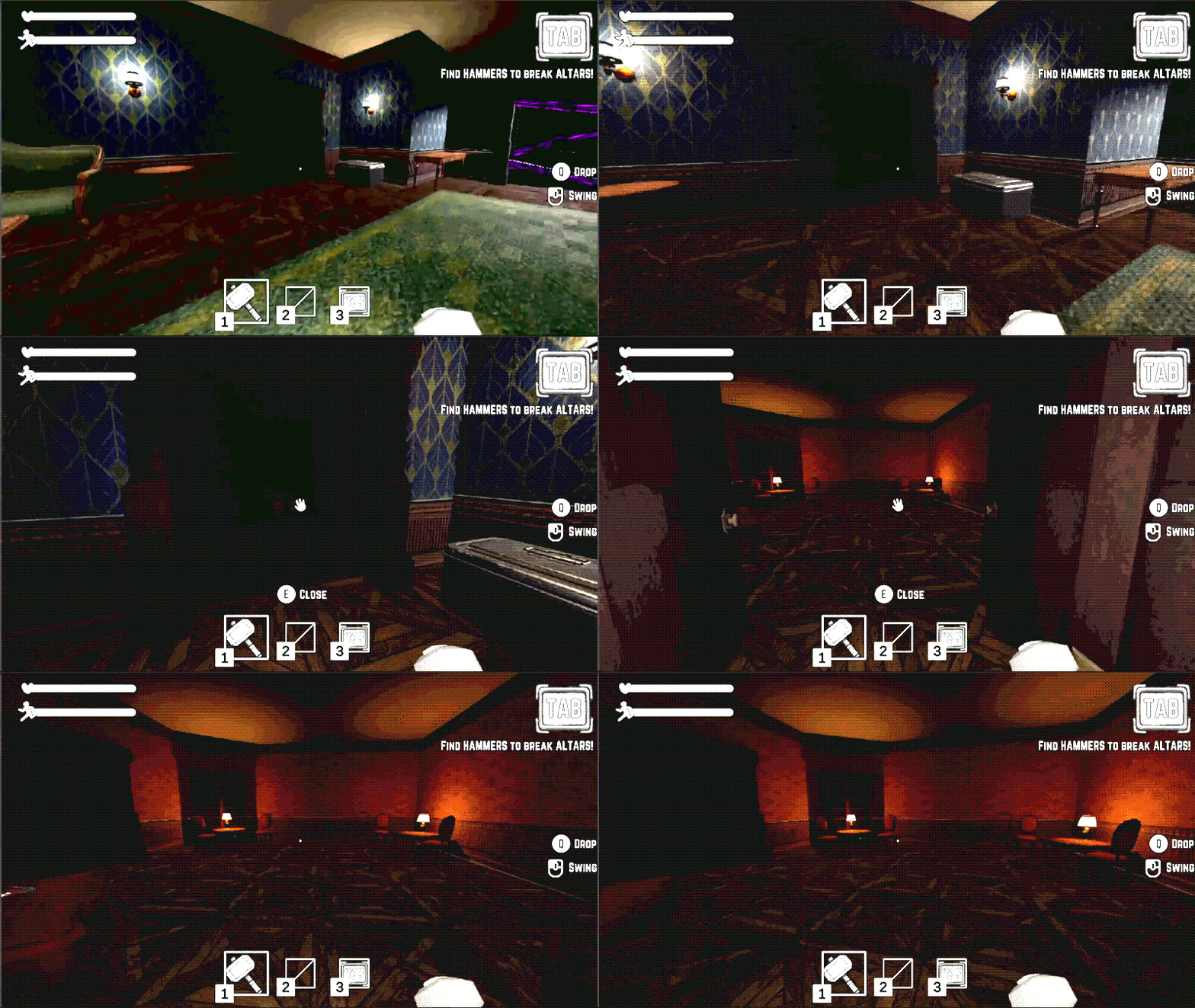
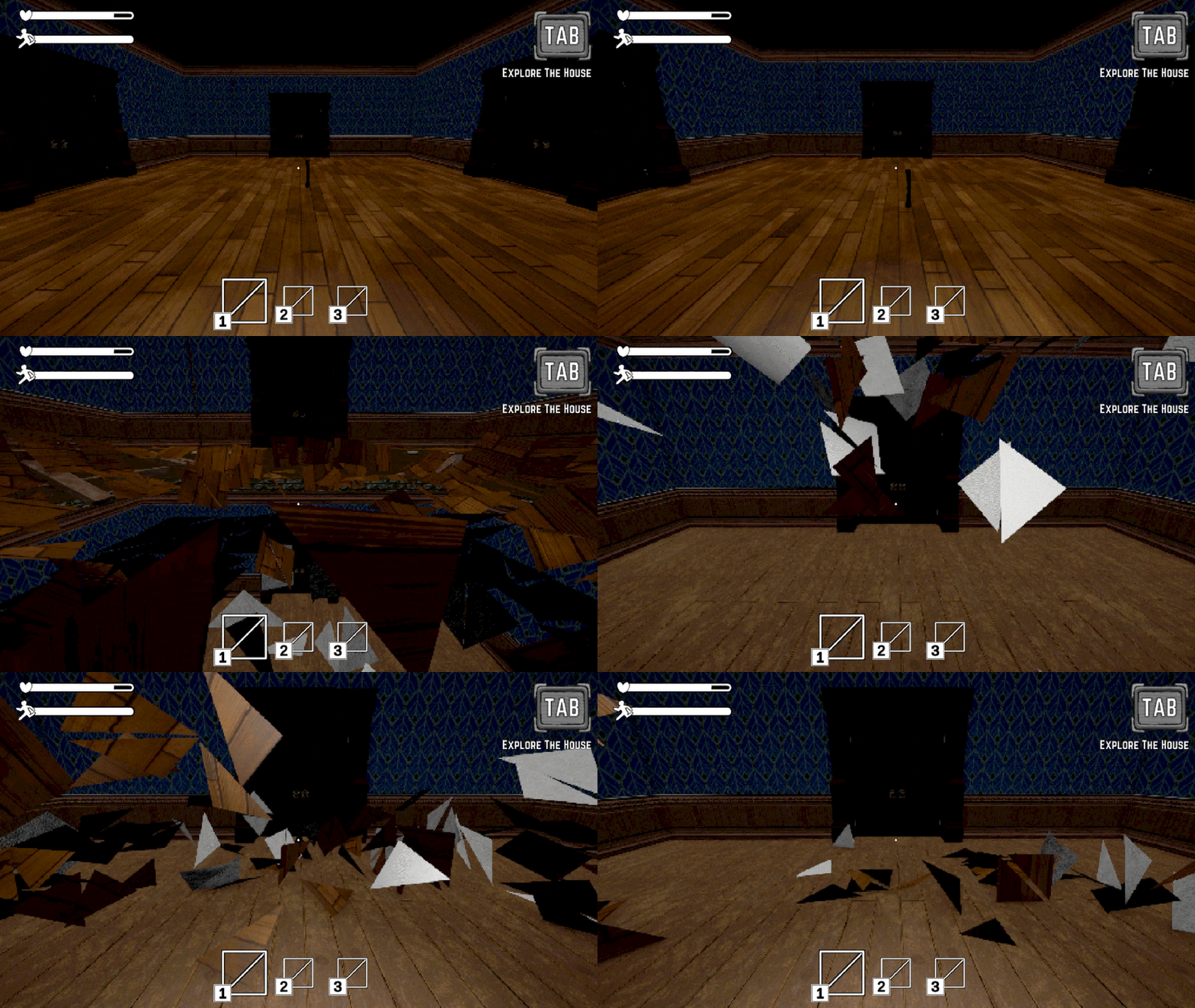
In the Exploration Phase, players act as a cooperative team navigating the mansion while advancing towards the game’s betrayal moment. During this phase, players:
- Explore the mansion room by room
- Players move through a procedurally generated manor, uncovering new rooms and gradually filling out their personal map as they traverse the space.
- Gather and manage equipment
- Players search rooms for items that can aid survival later, such as healing potions and teleportation scrolls.
- Solve environmental challenges
- Certain rooms contain puzzles, traps, or obstacles that require observation, coordination, or careful movement to overcome.
- Interact with cursed rooms and items
- Entering specific rooms or picking up cursed objects can trigger a Curse Check, which is a dice roll that advances the game toward the Curse Phase.
- Build the Curse Value
- Player actions during exploration increase the mansion’s Curse Value, which increases the likelihood that the Curse will activate as a result of a Curse Check.
3. Curse Phase
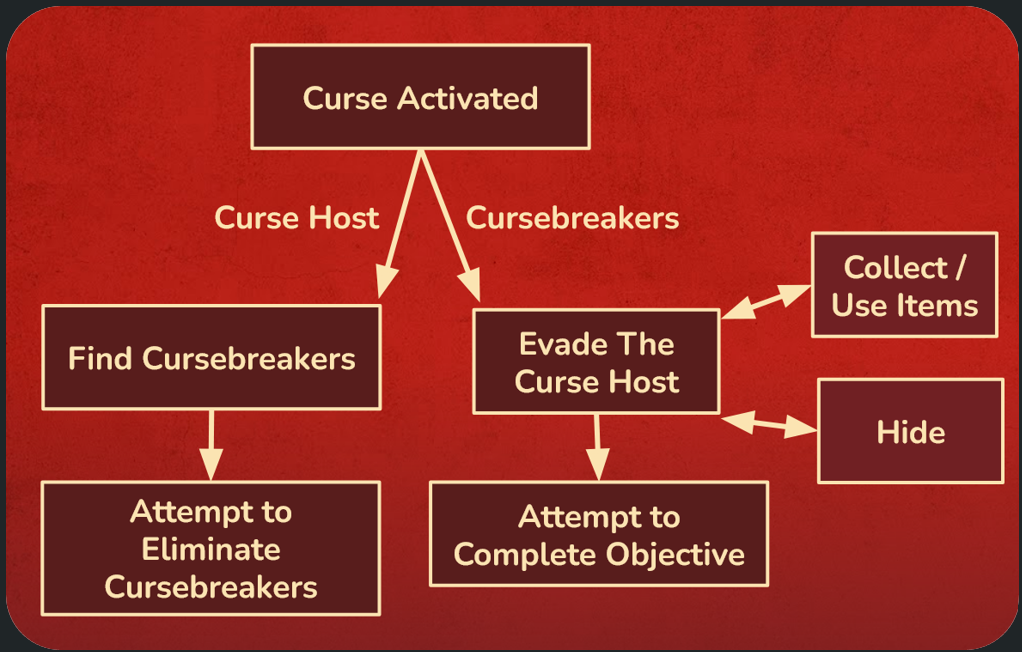
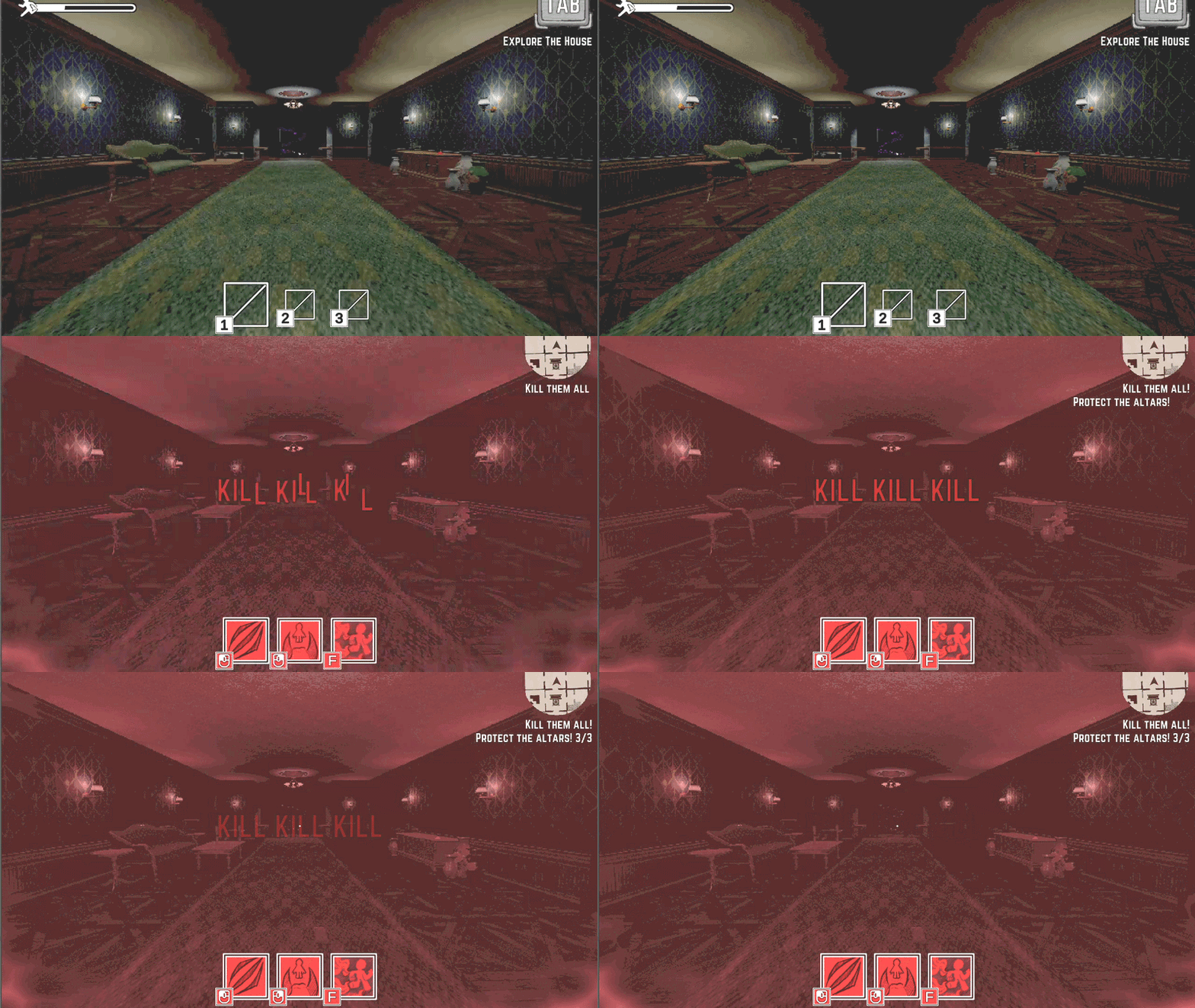
Once the curse is triggered, the game shifts from cooperative exploration to an asymmetrical conflict. During the Curse Phase:
- One player becomes the Cursed Host
- A single player is selected and transformed into a supernatural creature (The Werebeast, the Scarecrow, or the Entity) gaining unique abilities to use in eliminating the other players.
- Roles and objectives are revealed asymmetrically
- The Cursed Host learns their curse type, abilities, and objective, while the remaining Cursebreakers receive a shared objective focused on breaking the curse and escaping.
- Cursebreakers race to complete a randomized objective
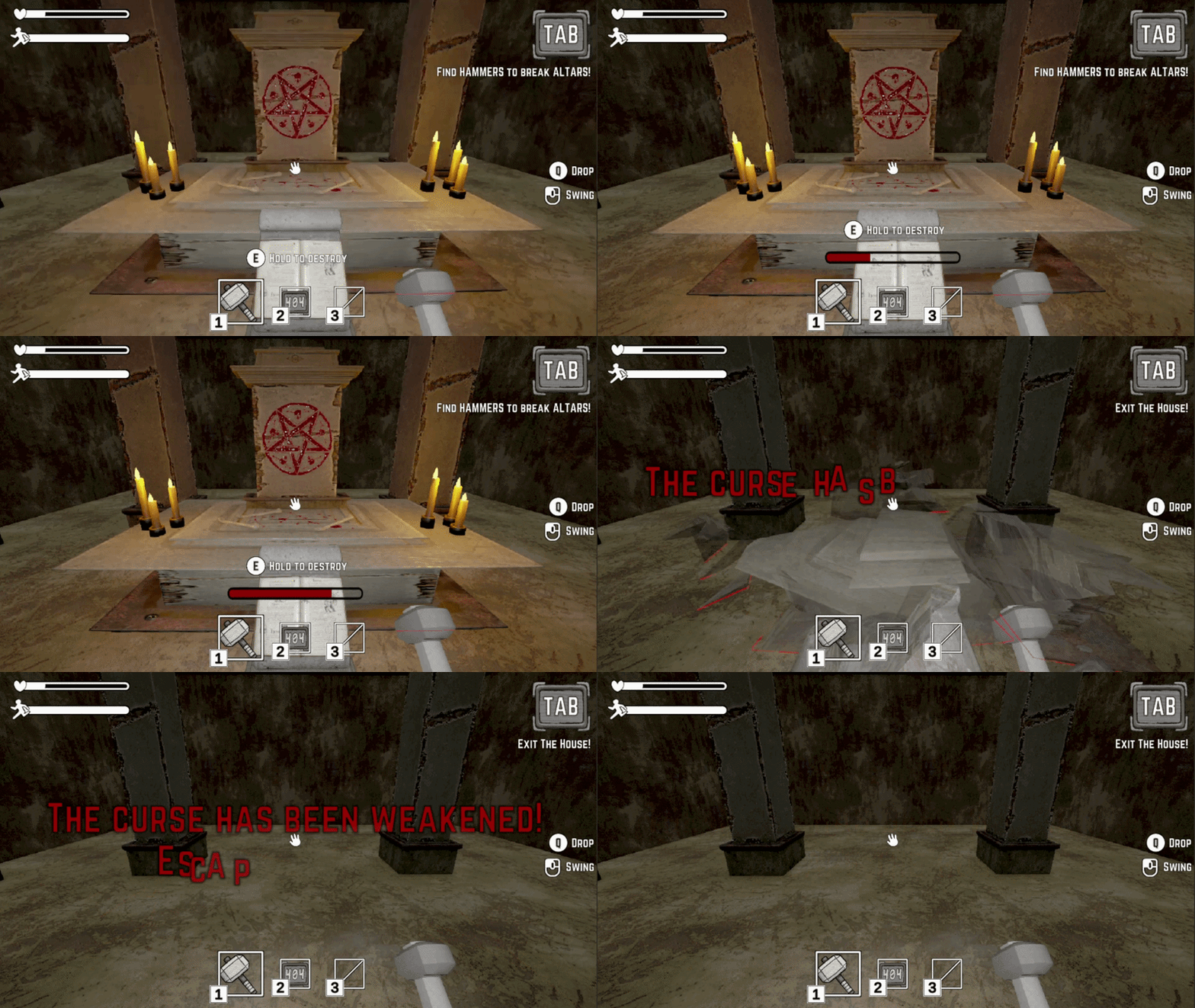
- Players must locate key rooms, gather or use specific items, and perform coordinated actions (such as destroying altars or assembling ritual components) before being eliminated.
- The Cursed Host hunts and sabotages
- The Host actively stalks the mansion, using movement, damage, and sensing abilities to track players, disrupt objectives, and isolate targets.
4. Curse Resolution

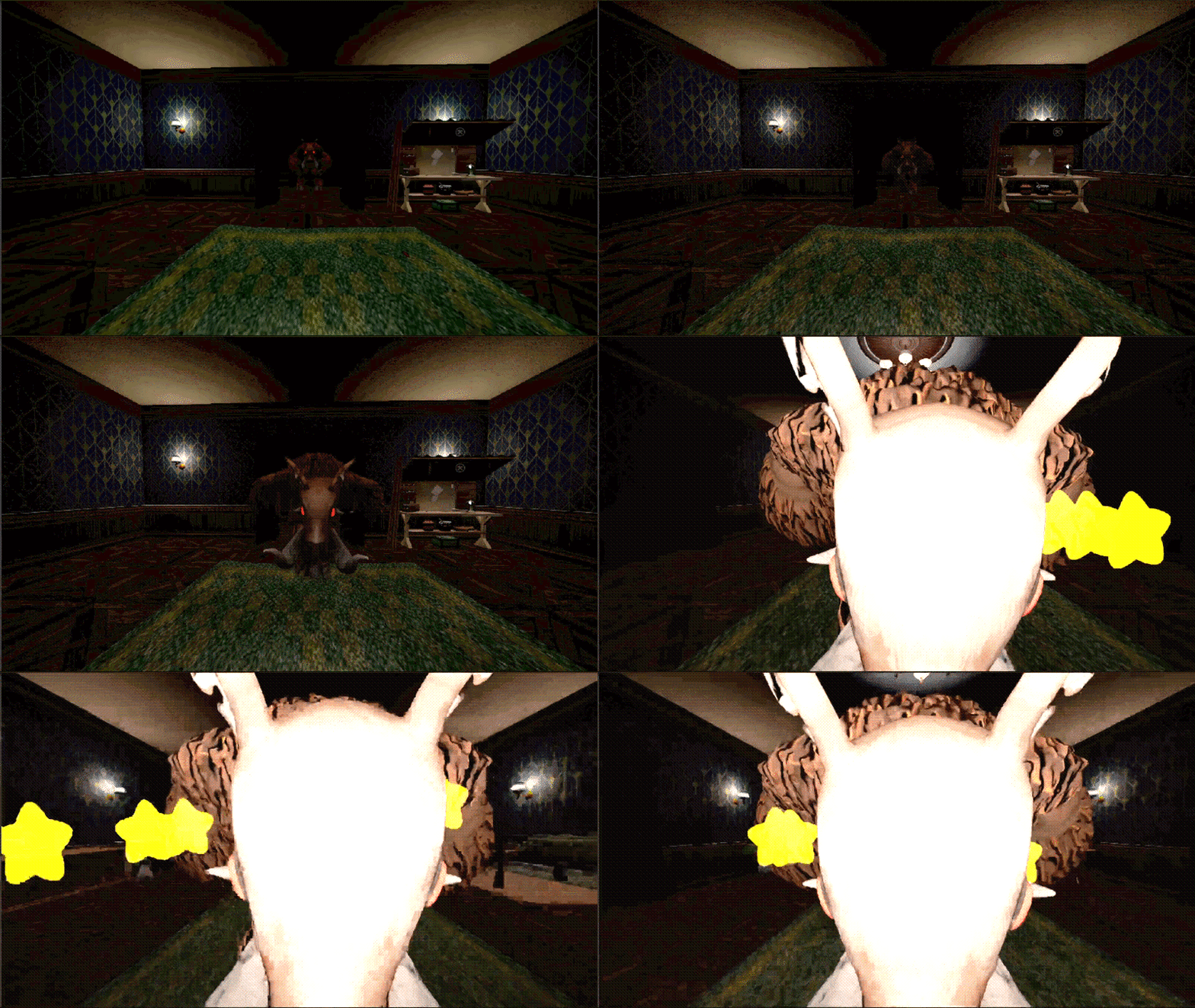

Once the Curse Phase has started, both sides race to complete their win condition, with the Cursebreakers attempting to finish their assigned objective and escape the mansion while the Cursed Host attempts to hunt and eliminate them. A single game of Cursebreakers resolves when at least one surviving Cursebreaker breaks the curse and escapes the mansion, or when all Cursebreakers are eliminated before they complete their objective.
Combat Design
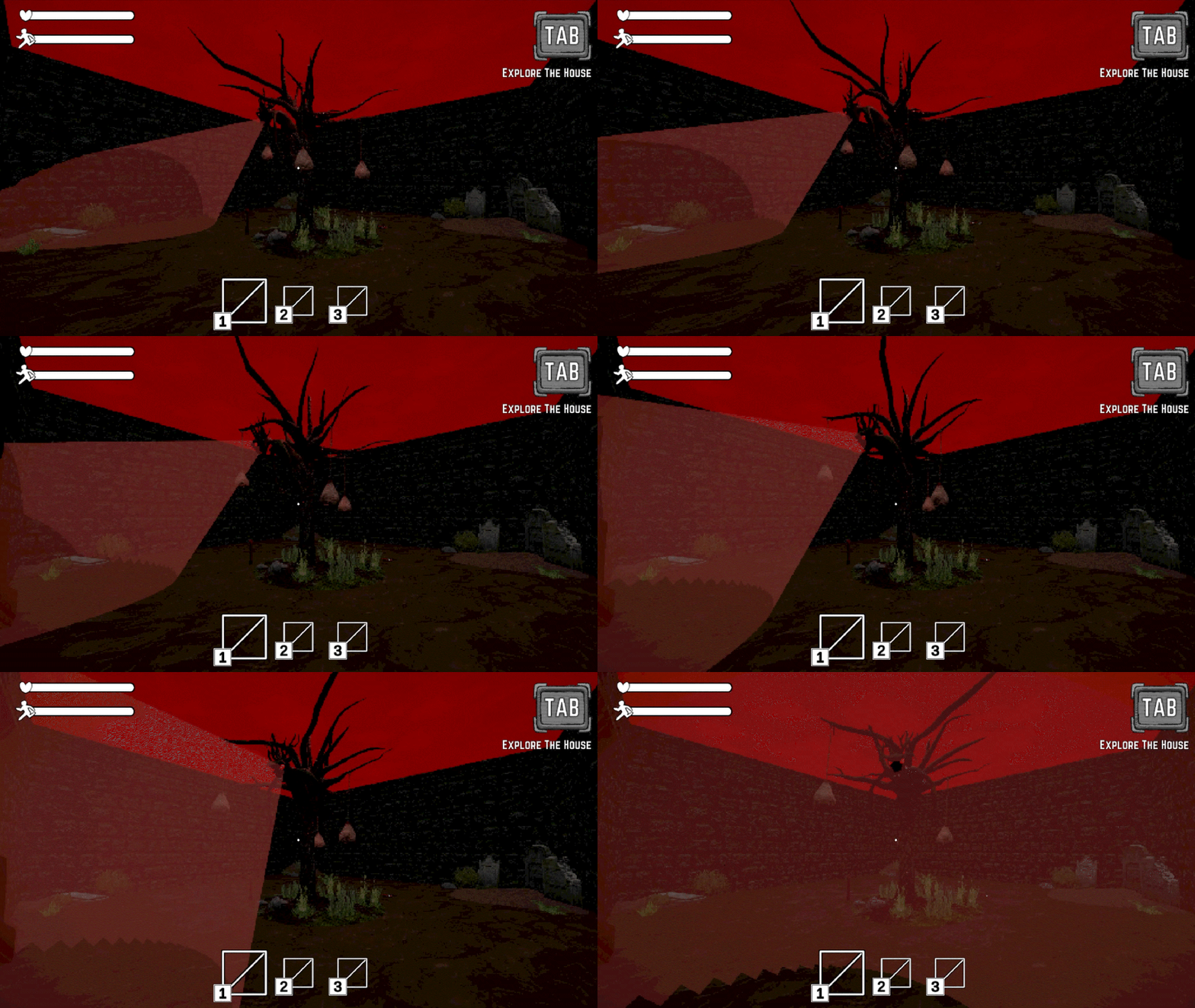
In Cursebreakers, one player eventually turns into a monster that must hunt down the other players. Every monster is designed with three vital mechanics in mind:
- How the monster will damage players.
- How the monster will move about the map and keep hunts active.
- And how the monster will know the whereabouts of the Cursebreakers and stay near them.
I designed three different monsters that a player could become once the Curse Phase triggered. The main monster that I focused on fully implementing for our capstone project was the Werebeast; The other two monsters are still in the process of being implemented.
The Werebeast
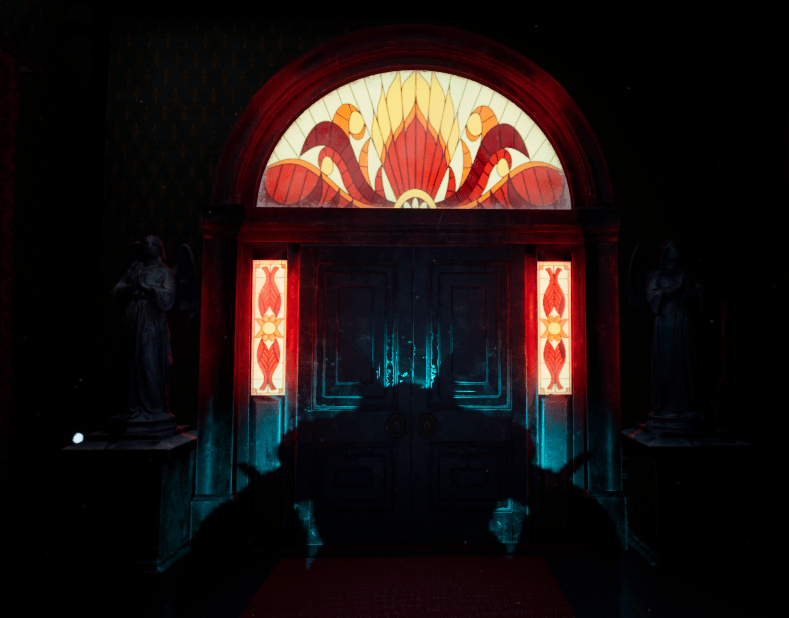
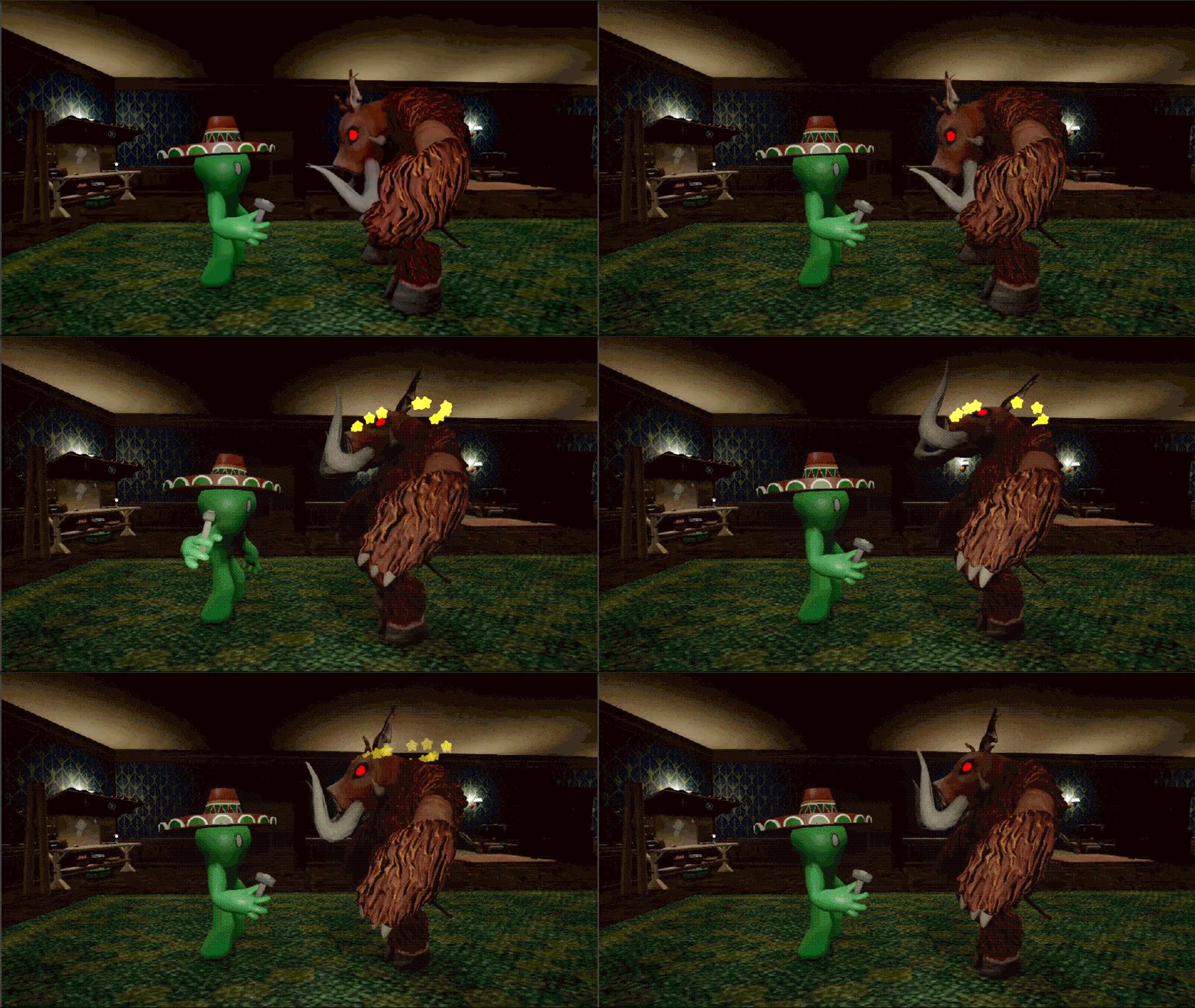
Fantasy: Rampaging Juggernaut. They’re a loud and clumsy beast you always hear coming, but which is difficult to escape.
Unique Abilities:
Claw Attack – A simple swipe at targets in front of them, which is their primary means of damaging players. This is how the Host is able to defeat the Cursbreakers before they complete their objective.
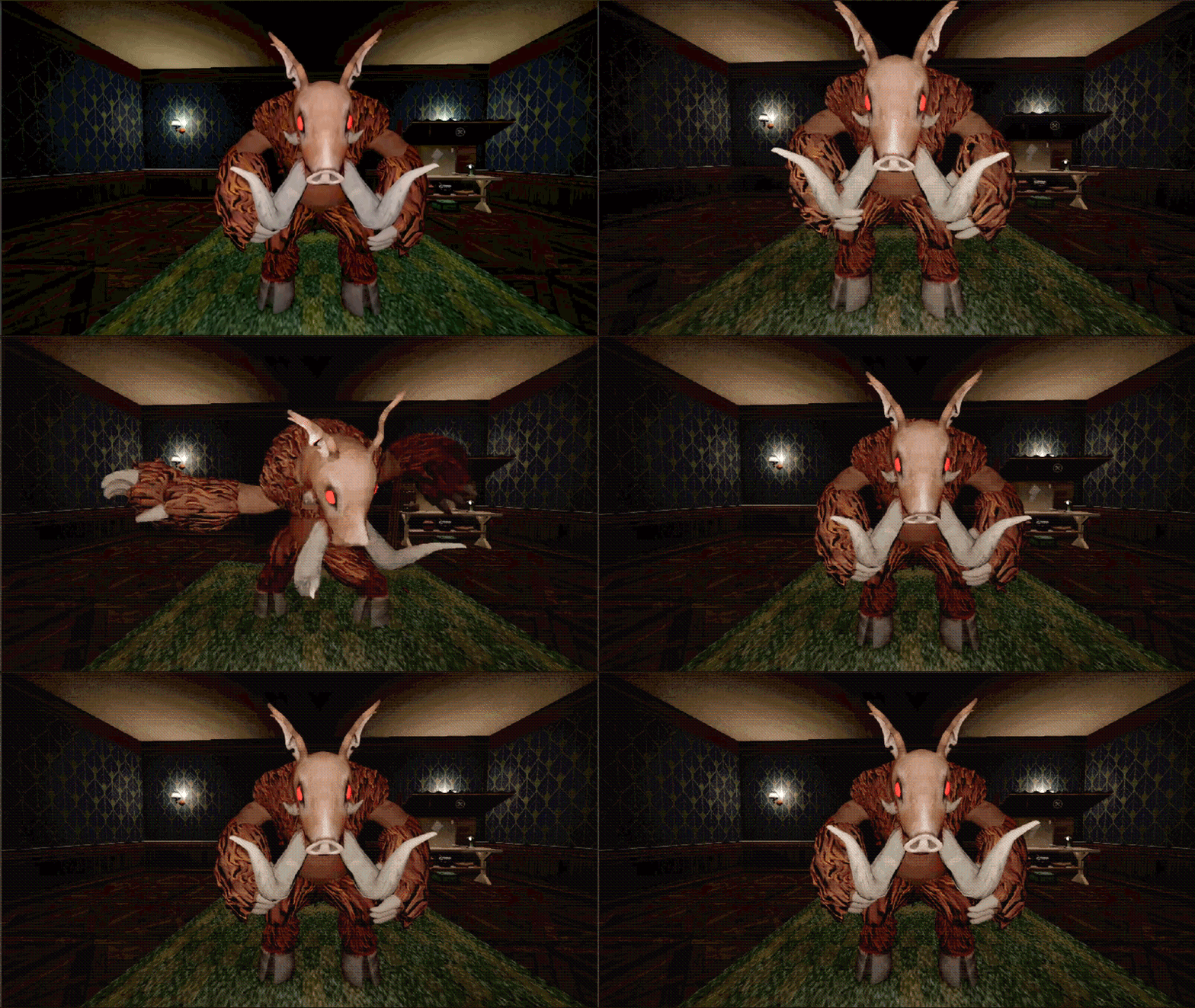
Charge Attack – Makes you run forward and catch players you run into, pinning them against the wall to deal damage. This, along with the fact that the Beast moves faster than players can walk but slower than they can run, ensures that chases remain interesting and active.
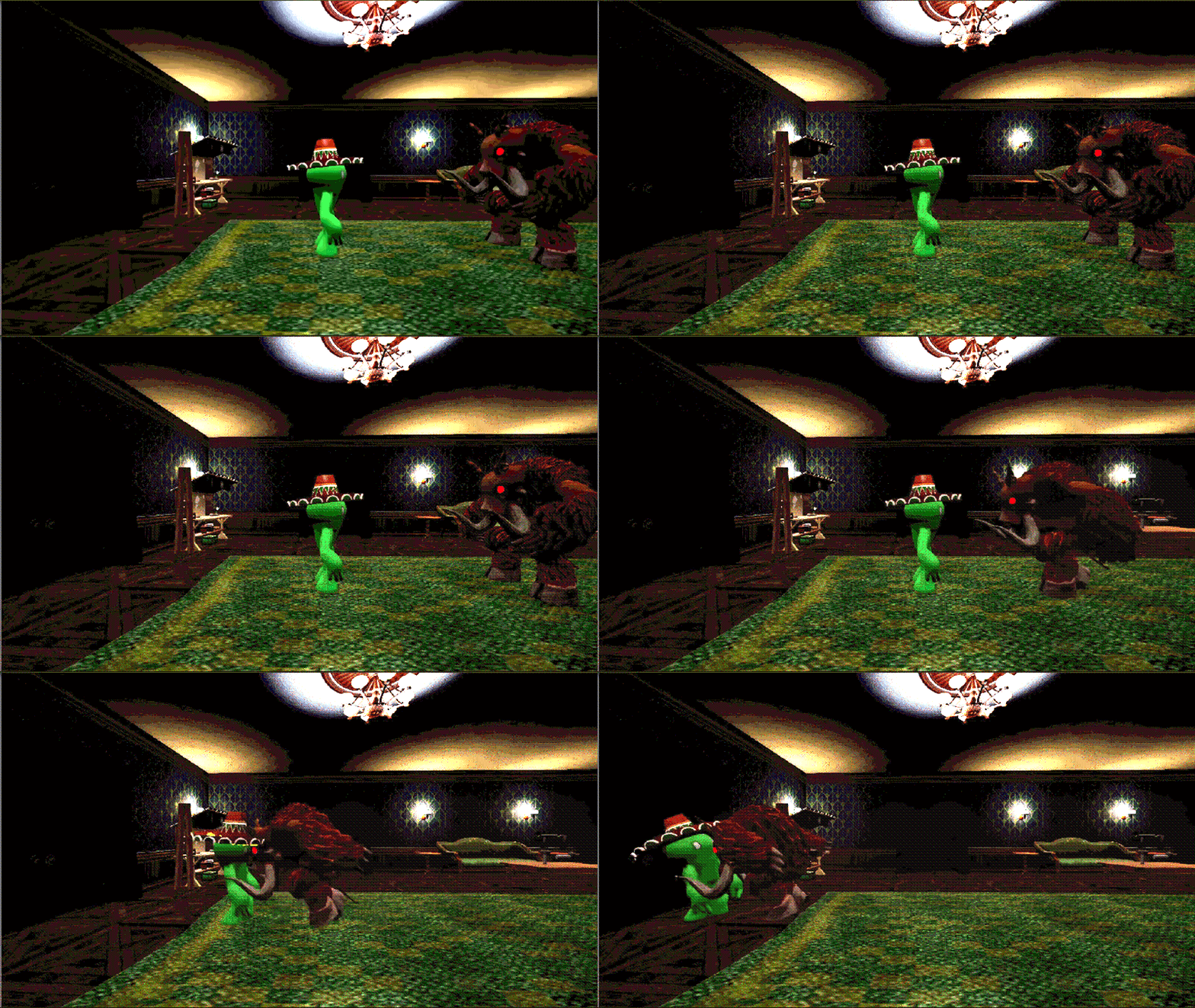
Blood Sense – Allows the Werebeast to see players within a set radius highlighted through walls. This acts a means of sensing players, which is how the Host will know the whereabouts of the Cursebreakers and stay near them.

Items are the main tool that Cursebreakers can use to avoid the Curse Host once the Curse phase begins. Items include ways of trapping or stunning the monster, healing the player, or teleporting to another location. However, items generally either have limited uses, or cooldowns on how often they can be used. This means that Cursebreakers can never fight the Curse Host outright; Instead, they must use their items to gain a momentary advantage, and run away to another location where they might be able to find another useful tool. This gives Cursebreakers a way of evading the monster without decreasing the tension they feel, as they are often left defenseless and scrambling after using their items.
House Generation

Cursebreakers uses a pre-procedural house generation system that combines authored room types with constraint-based layout generation. Critical rooms (entrance, exit, objectives) are placed at the beginning of generation, with each room having their own restrictions on spacing and distance, before the rest of the surrounding mansion is generated to create varied paths and dead ends.
Once the layout of the mansion is generated, the mansion is further populated with various items that can aid players with the exploration of the mansion, communication between survivors, or locating key objectives, or defending against the Curse’s Host.
Networking

Cursebreakers is networked through a combination of Steamworks and a handcrafted system. Steamworks.NET is an api that ports Steamworks to Unity and allows for messages to be sent over the network between client and host (server). Actual message information and response are all controlled through a custom-made networking solution. This system uses snapshots that store data, which can be used to access and compare data from each client and the server to appropriately fix any issues that arise in the network.
User Interface
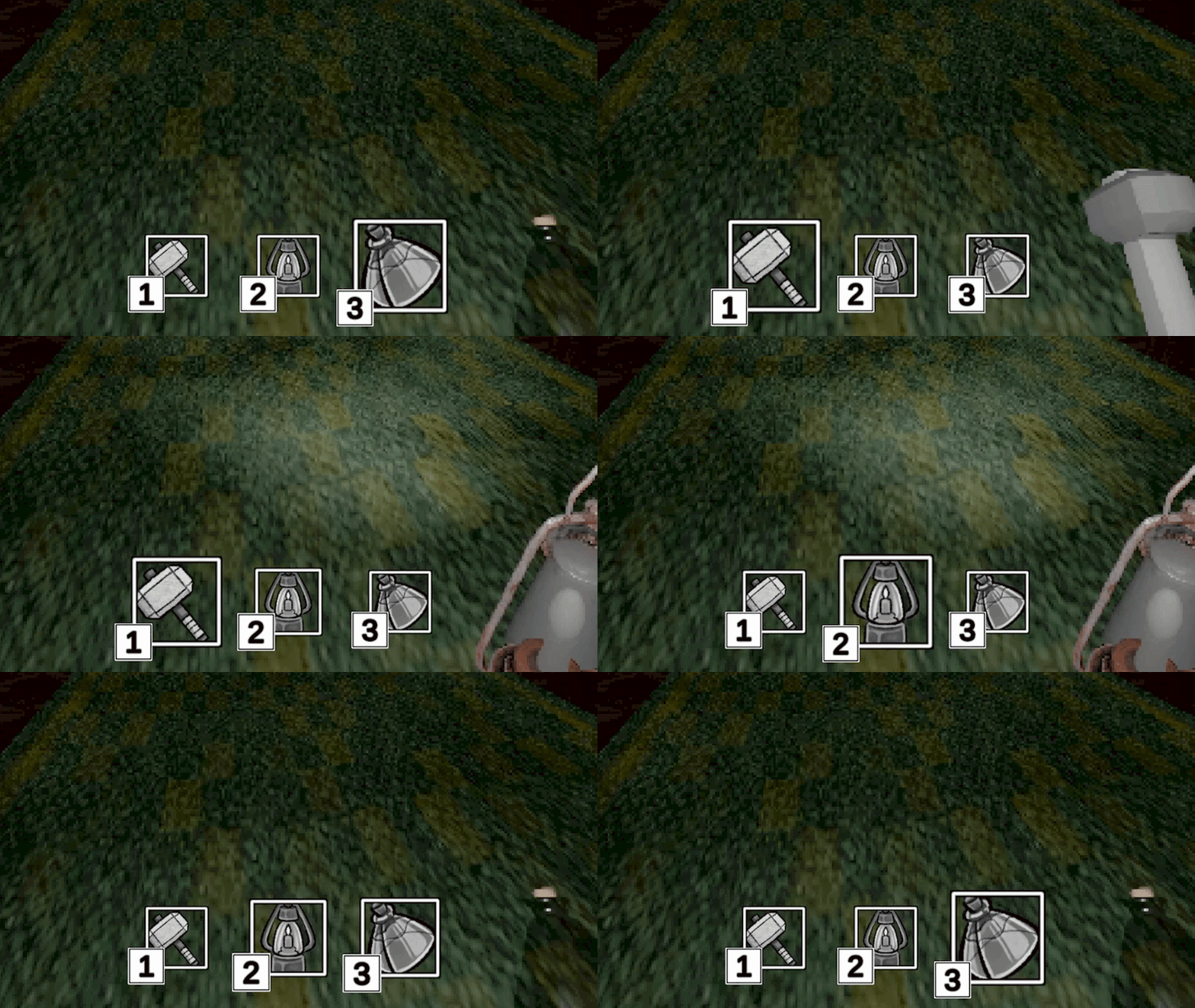
The player’s inventory consists of three item slots displayed along the bottom of the screen, with smooth animations that emphasize the currently selected item as players switch between equipment. Exploration is supported through a dynamic map that gradually reveals the procedurally generated mansion as rooms are discovered while continuously displaying the player’s position and facing direction. Health and stamina are presented using minimal HUD elements, with recent damage briefly highlighted before smoothly fading to the player’s updated health, providing immediate combat feedback without overwhelming the interface.


Prototyping
I led the rapid prototyping across Cursebreakers’ core systems, using iteration and playtesting to validate ideas early and refine them into mechanics that fit well into our game. Prototypes were built with a focus on modularity and extensibility, allowing the team to explore risky concepts while maintaining forward momentum in development.
Key prototyping efforts included:
- Curse Trigger and Curse Value mechanics, which were iterated on to balance tension and unpredictability.
- Asymmetric role transitions, prototyping the shift from cooperative exploration to adversarial play to ensure the moment of betrayal felt clear and dramatic, while also ensuring the Cursed Host’s monstrous abilities felt fun both to use and play against.
- Procedural house generation tools, testing different constraint rules and room layouts and compositions to tune a match’s pacing and build-up of tension.
- Various moment-to-moment interactions, including movement, item usage, and puzzle interactions, with frequent adjustments based on playtest feedback to improve their impact and feel.
Area Design
I created blockouts for dozens of different rooms that could spawn within the mansion, and later passed over them with completed art assets when the room’s structure was set in stone and the necessary art assets were complete. Below are a few examples:
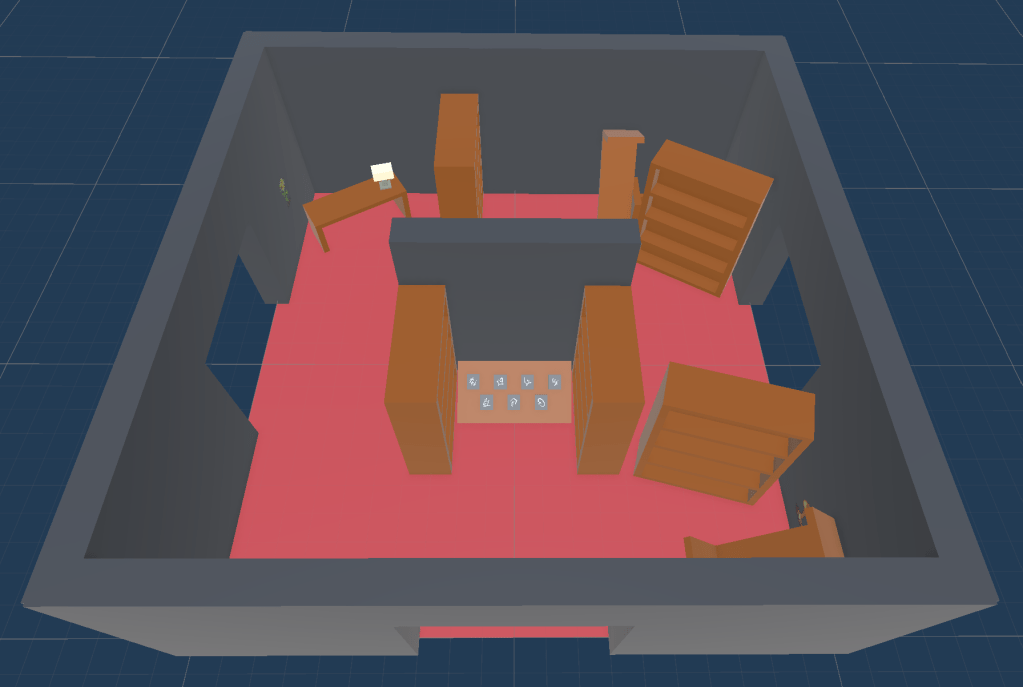
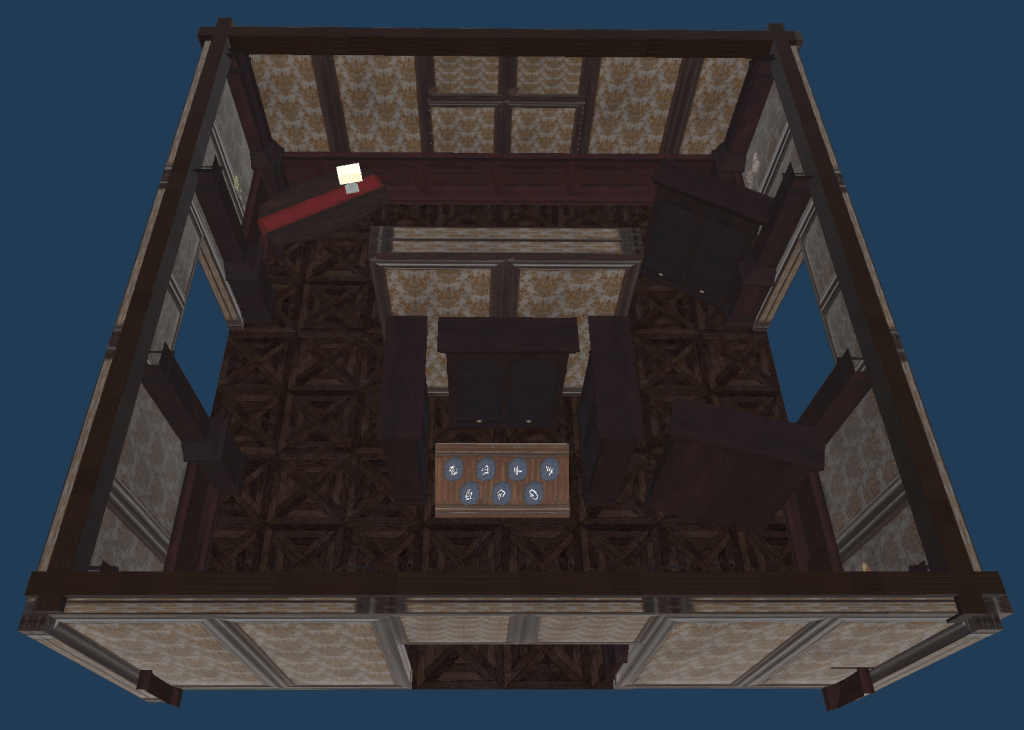
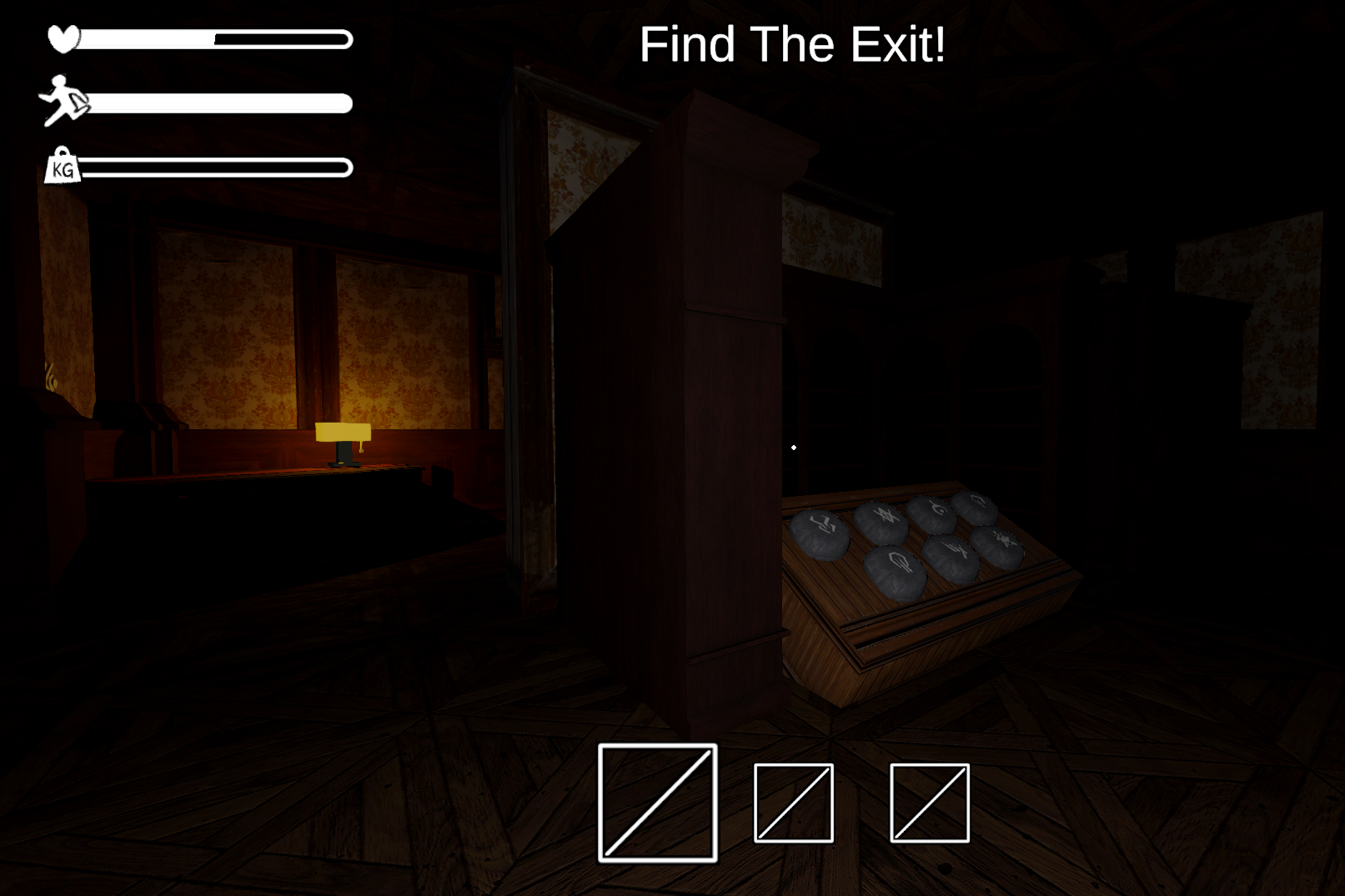
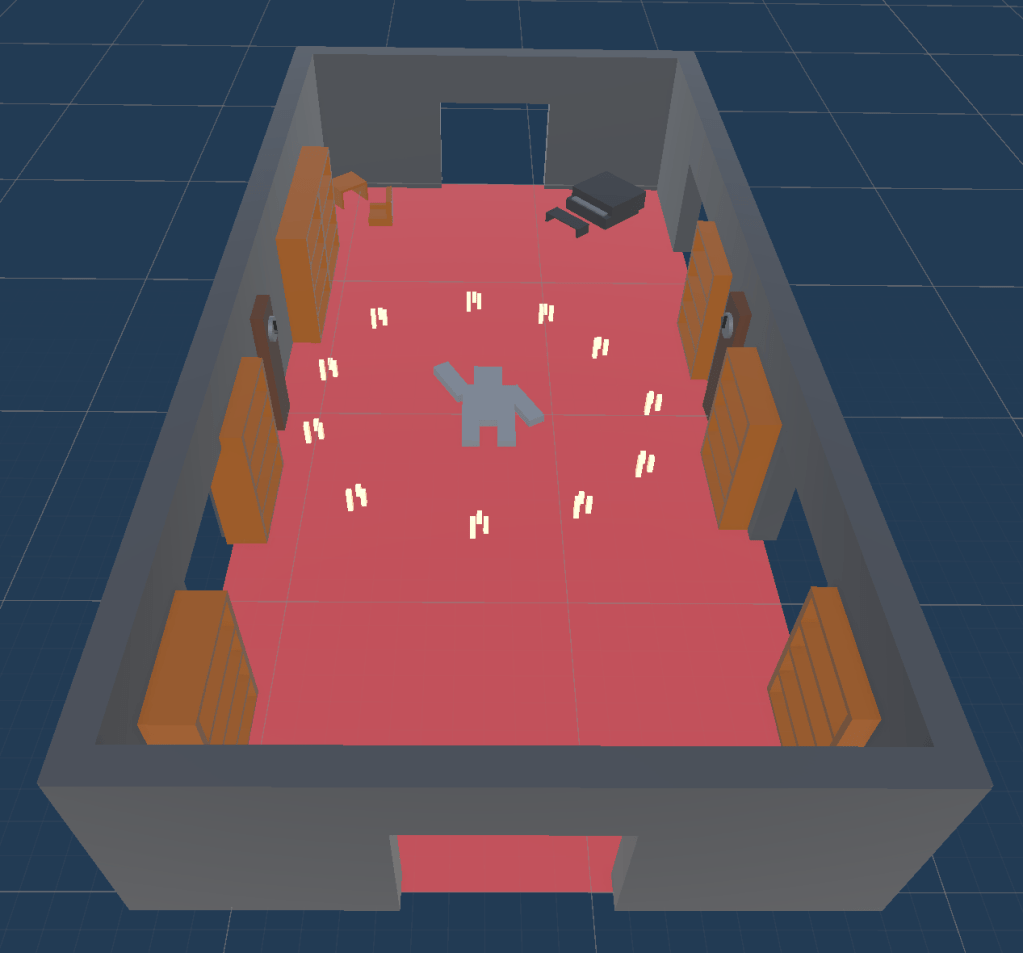
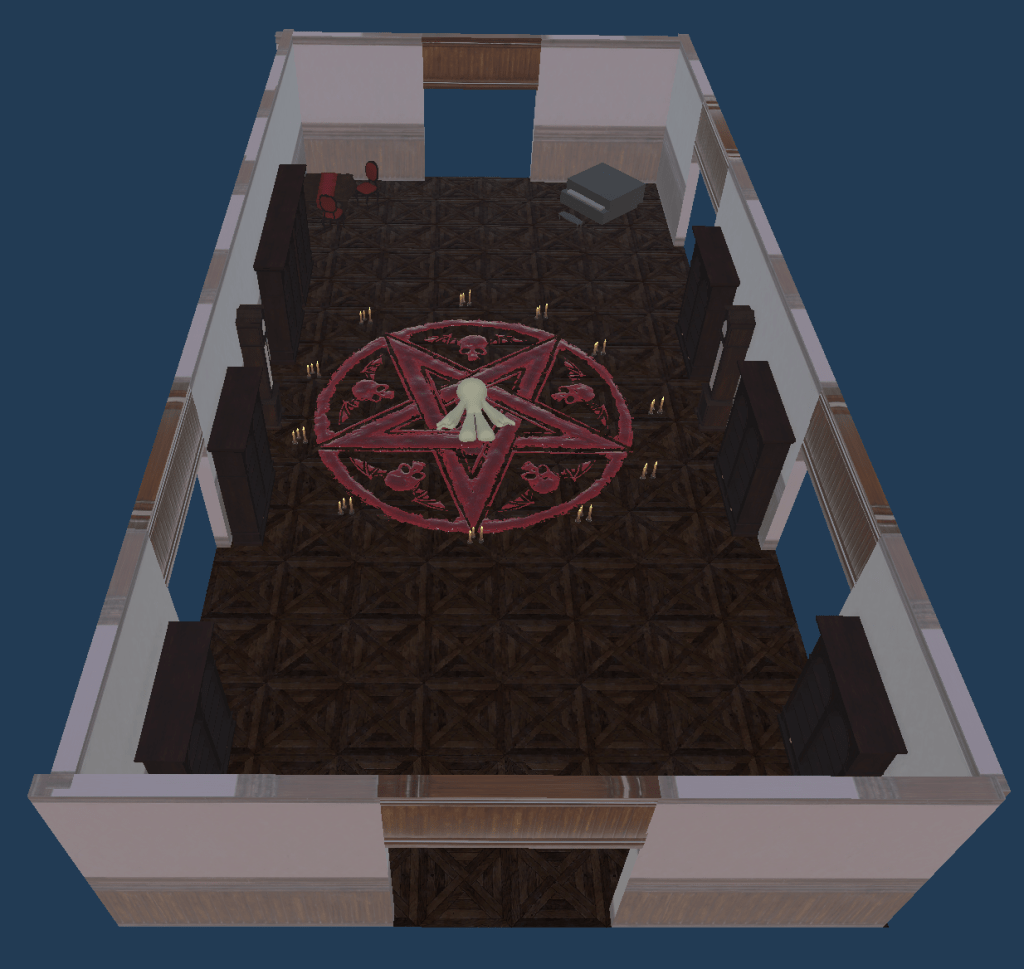
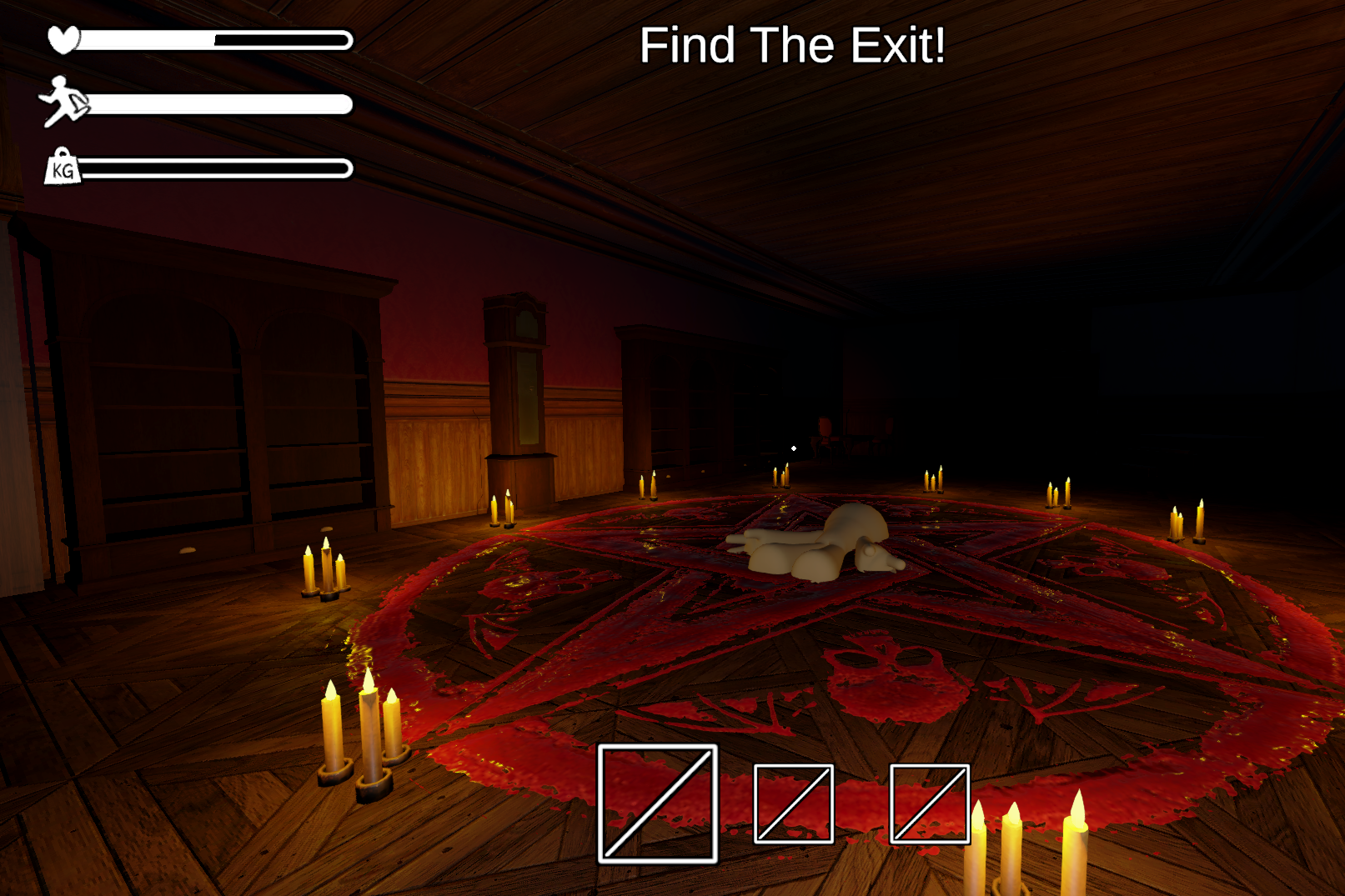
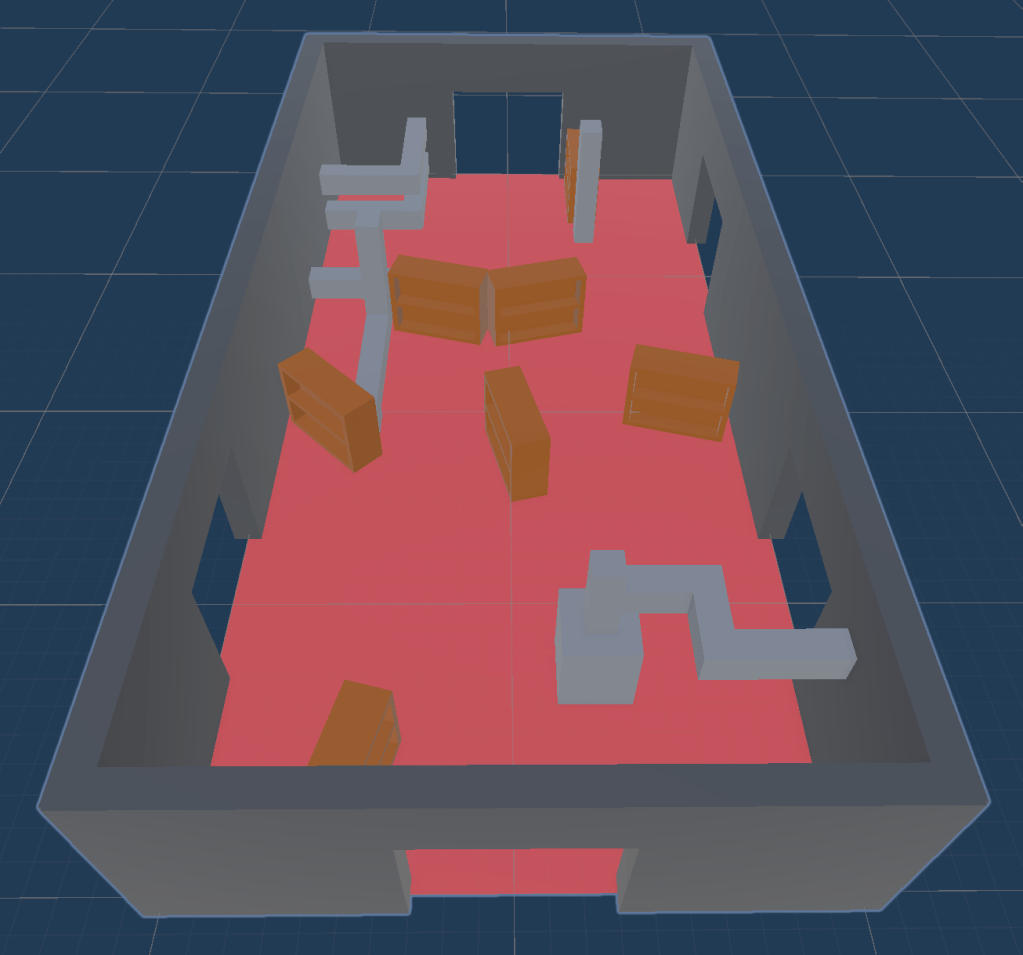
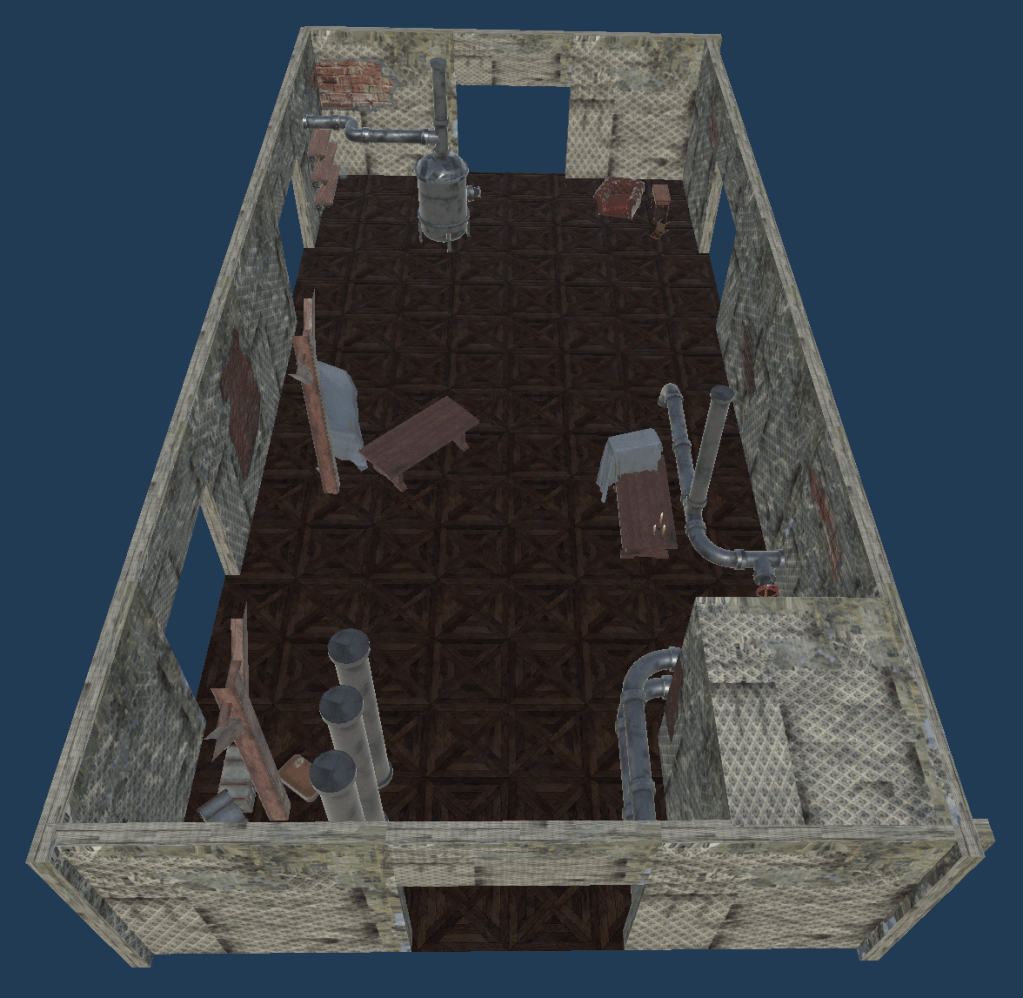
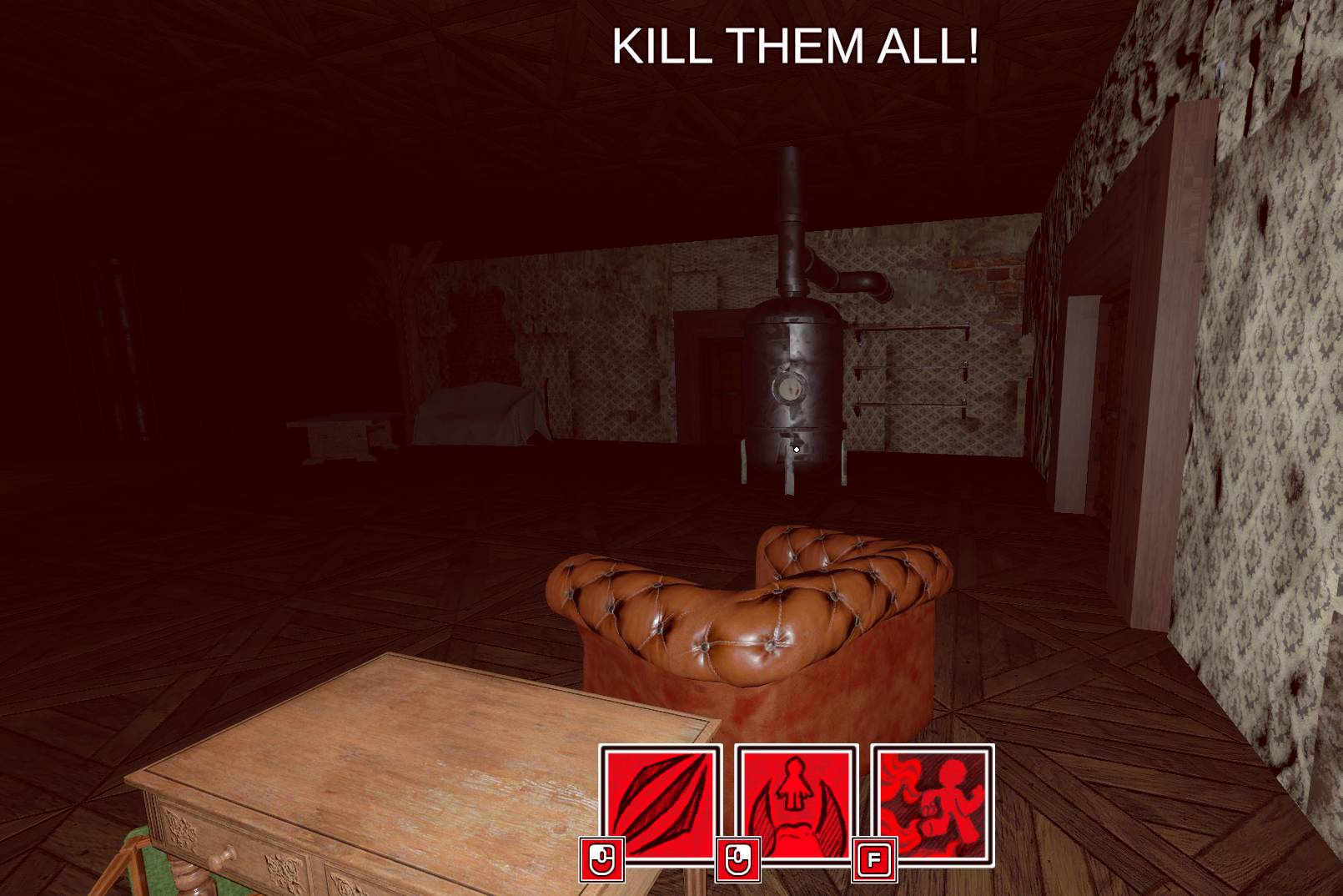
Additionally, I created top-down sketches and detailed plans for a variety of unique rooms that contain puzzles and challenges for the players that enter these areas. When completed, these challenges reward the players with a special item, or unlock a door to a secret area. These challenges are meant to be trivial in nature, but they become much more difficult to complete when there is the pressure of another player that is hunting you down as a monster. Some of these challenges are meant to be completed solo, while others are built to be more easily completed with a partner.
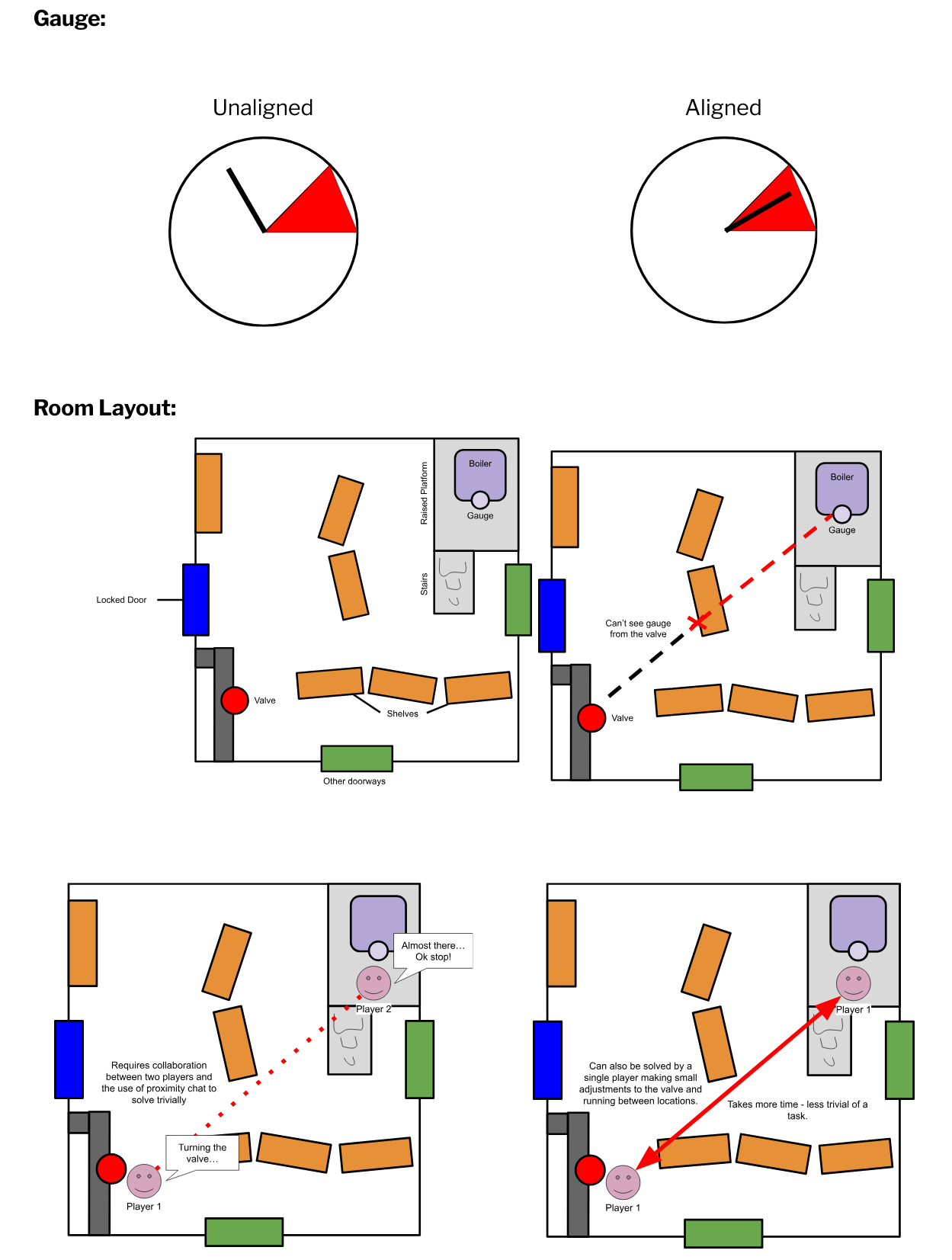
For example, one challenge room I created was the “Boiler Room.” In one corner of this room, there is a pipe valve. In the other corner of the room is a boiler with a pressure gauge. The pressure gauge is simple and featureless, with only a hand and a small section of the gauge marked in red.
Holding E on the valve causes it to turn slowly; As the valve is turned, the hand on the pressure gauge also turns. The players must get the gauge’s hand to overlap the red area, and keep it there for several seconds. This is a task that becomes a lot easier when two players are working together, as a player watching the gauge can communicate to a player turning the valve when to stop.
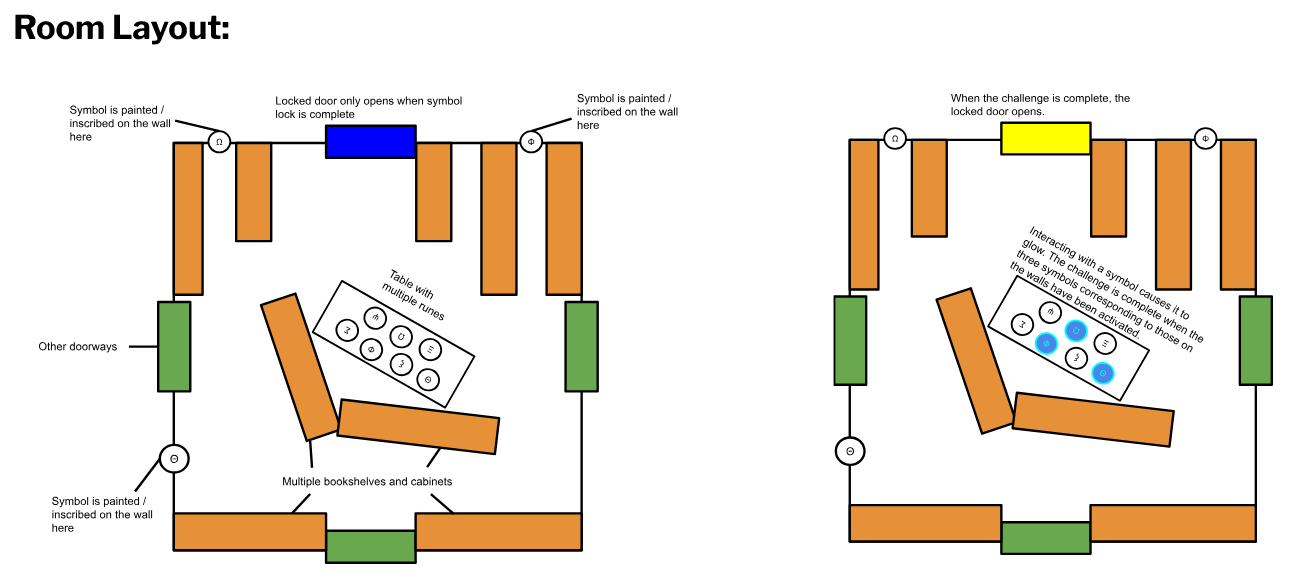
Another example is a much simpler challenge room called the “Symbol Room”. In this room, a tableau of seven runes are laid out upon a table. Interacting with a rune causes it to light up. Lighting up the three correct runes causes the runes to glow green and for the challenge room to unlock its corresponding locked door. Lighting up the three incorrect runes, however, causes the runes to glow red and resets the challenge room. Three different runes are inscribed on the walls of the room, in different hidden locations; These three runes correspond to the correct runes the player must press.