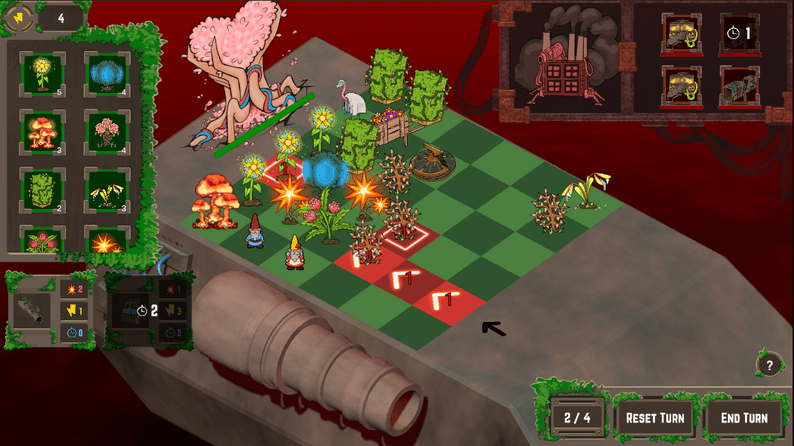
Go to the Verdant Engine itch page and play it in-browser by clicking here!
Game Overview
Verdant Engine is a single-player strategy roguelike where you control a massive mech possessed by a plant-like entity. On its back grows a living garden – and the placement of plants determines your combat abilities. Players must traverse a ruined city, battle polluting factories, and ultimately defeat the central AI that perpetually suffocates the world.
- Genre: Strategy Roguelike
- Core Fantasy: Harness the power of nature to fight industrial war machines.
- Design Pillars:
- Strategic Placement – Adjacency and synergy between plants matter.
- Player Options – Flexible builds, choices between map locations and rewards.
- Replayability – Procedural maps, randomized encounters, shops, and rewards.
My Contributions in Game Design
As the project’s primary Game Designer, I was responsible for:
Core Systems Design
- Led the conceptualization and development of Verdant Engine, establishing the game’s core design pillars, fantasy, and game loop.
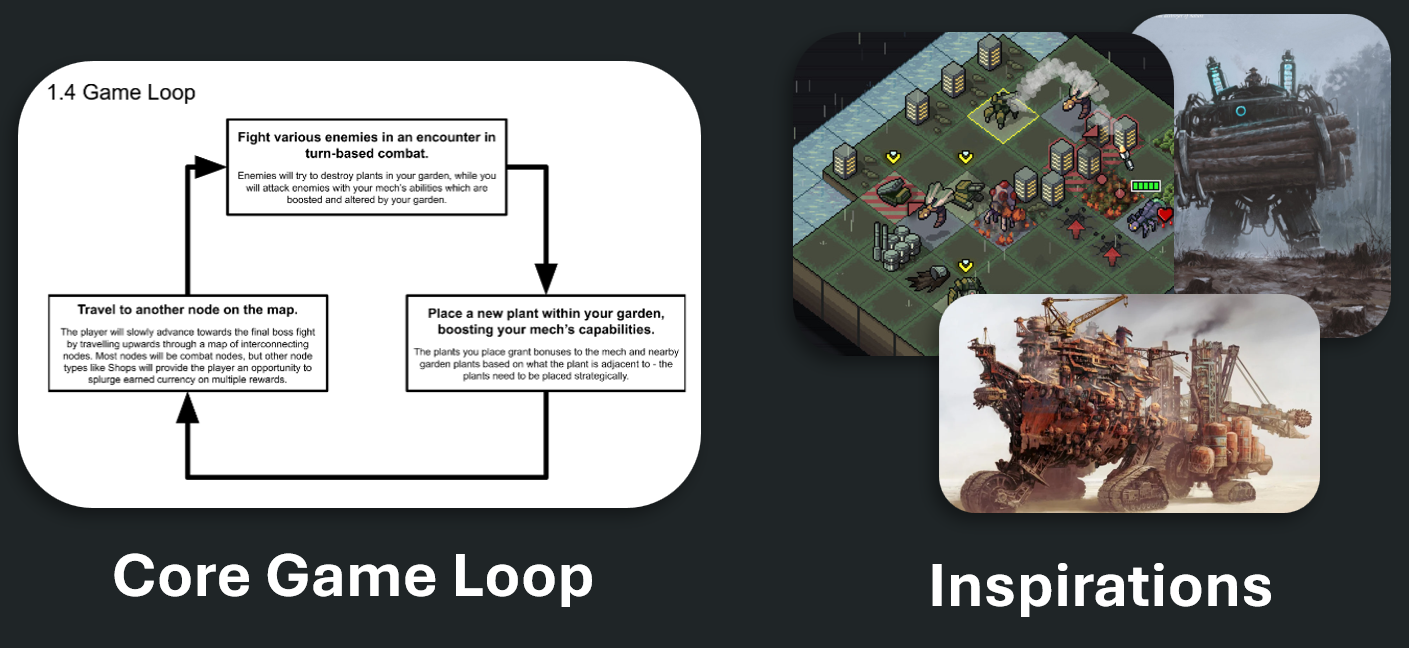
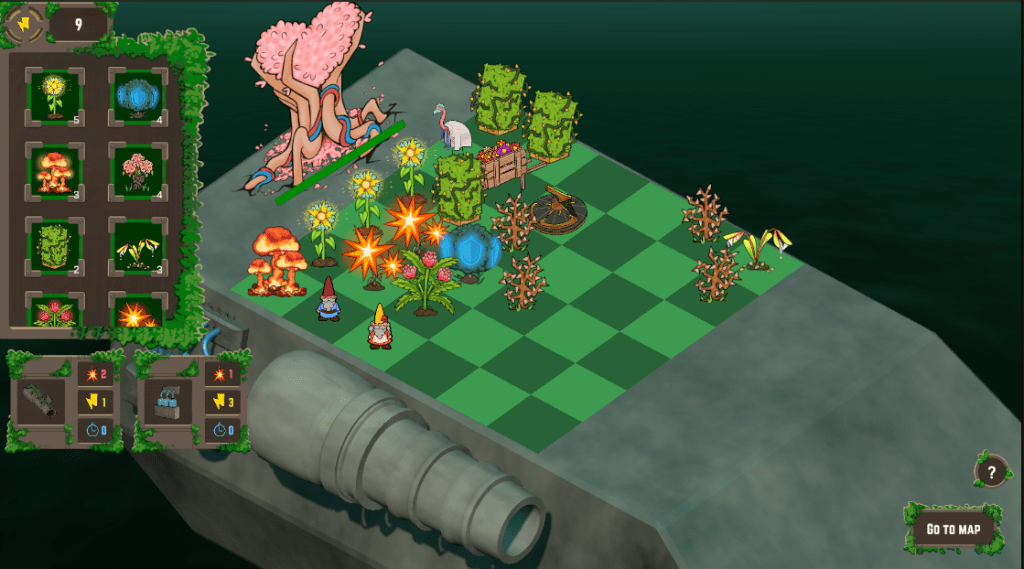
- Defined the Garden System (6×6 grid where plant placement affects combat).
- The player is able to manipulate the garden freely outside of combat; Within combat, they are limited to a set number of actions (default 3). Combat revolves around moving plants on the grid and planting new ones in response to enemy attacks.
- Established supporting systems for combat, including the Plant Inventory System, Energy Resource System, Mech Parts System, and Enemy Parts System.
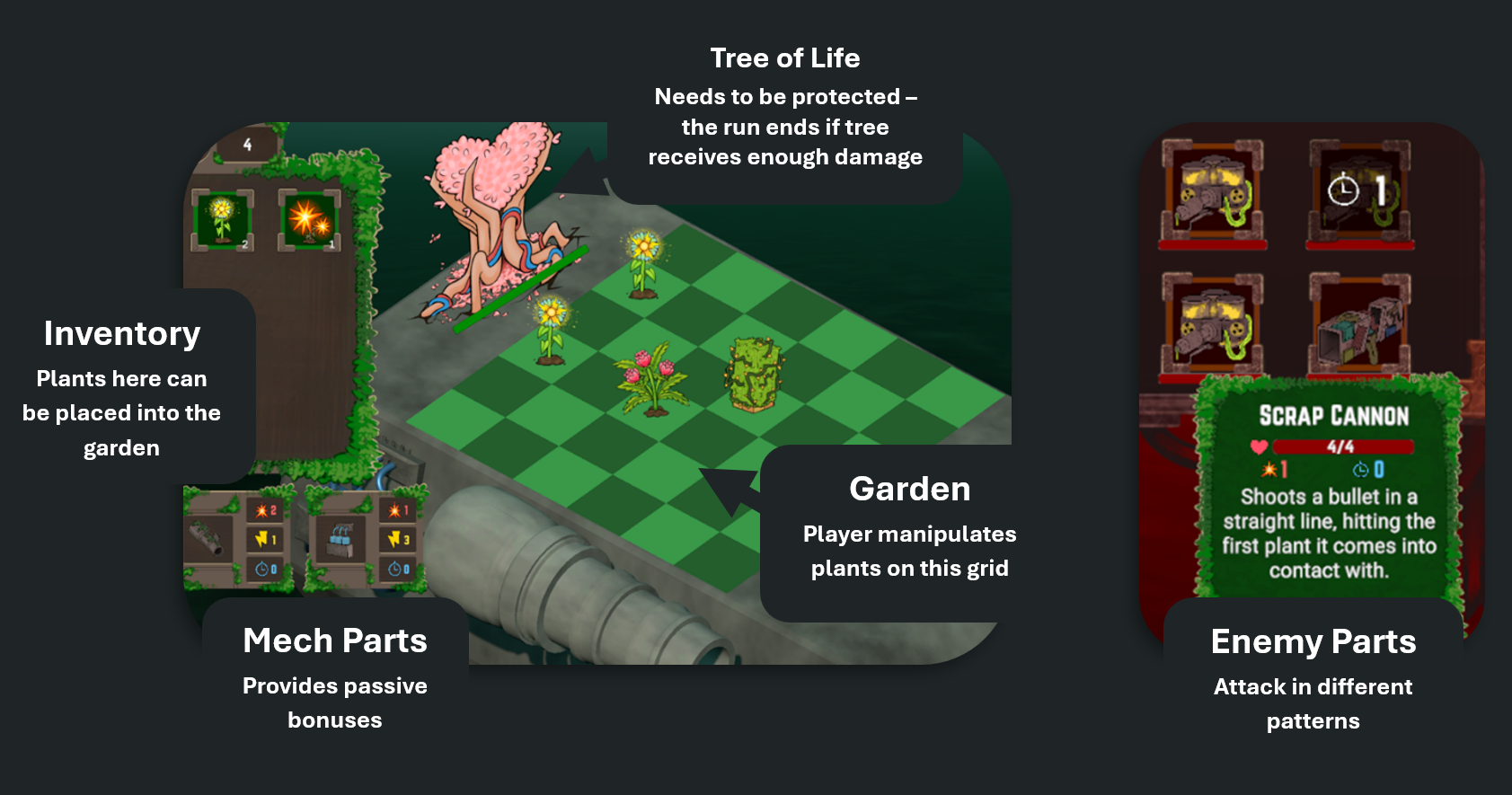
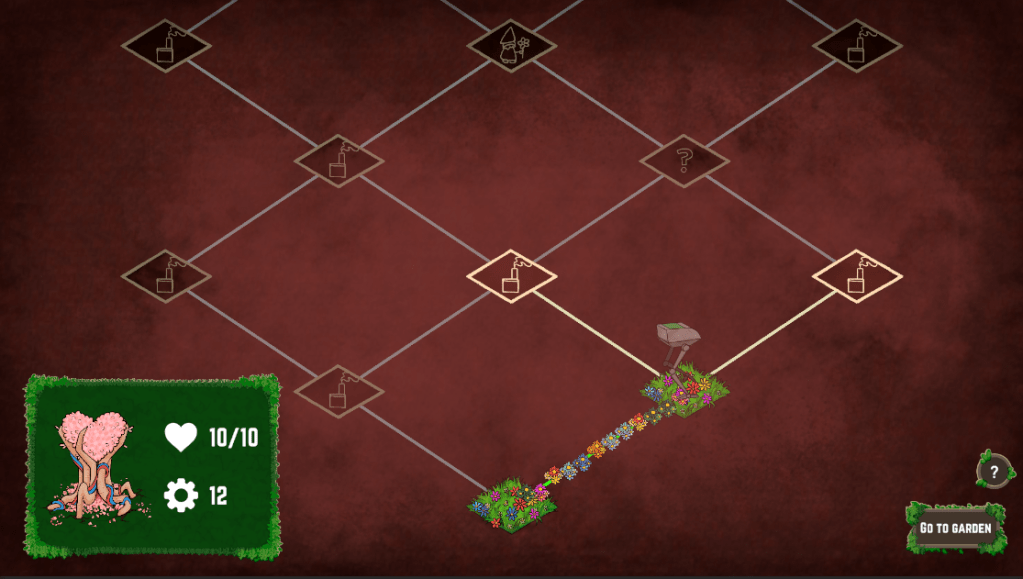
- Designed map traversal (Inspired by Slay the Spire), with combat, shop, and event nodes.
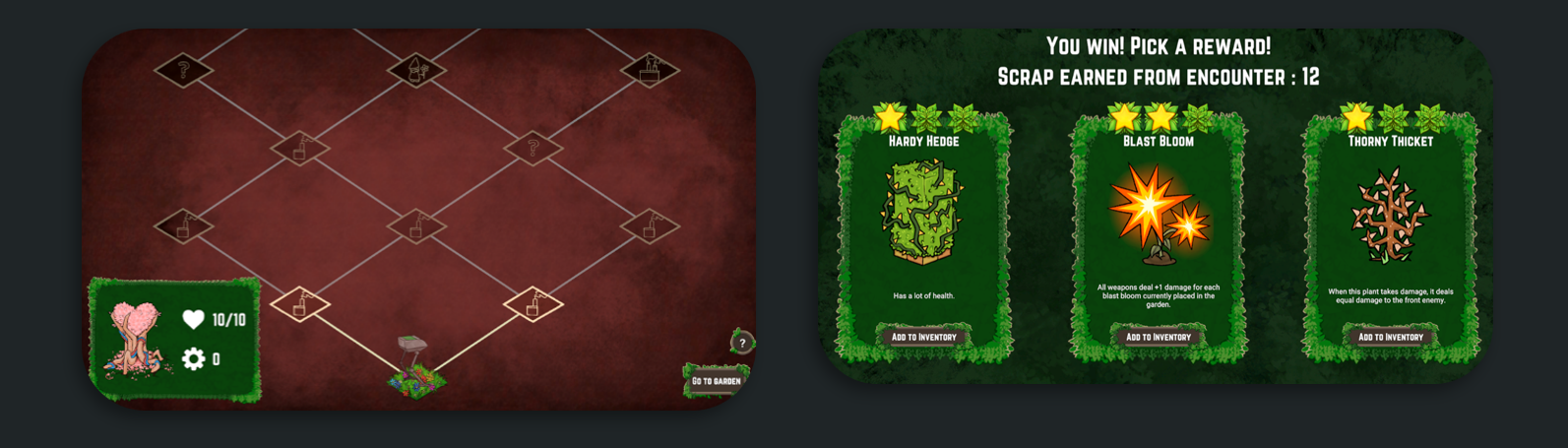
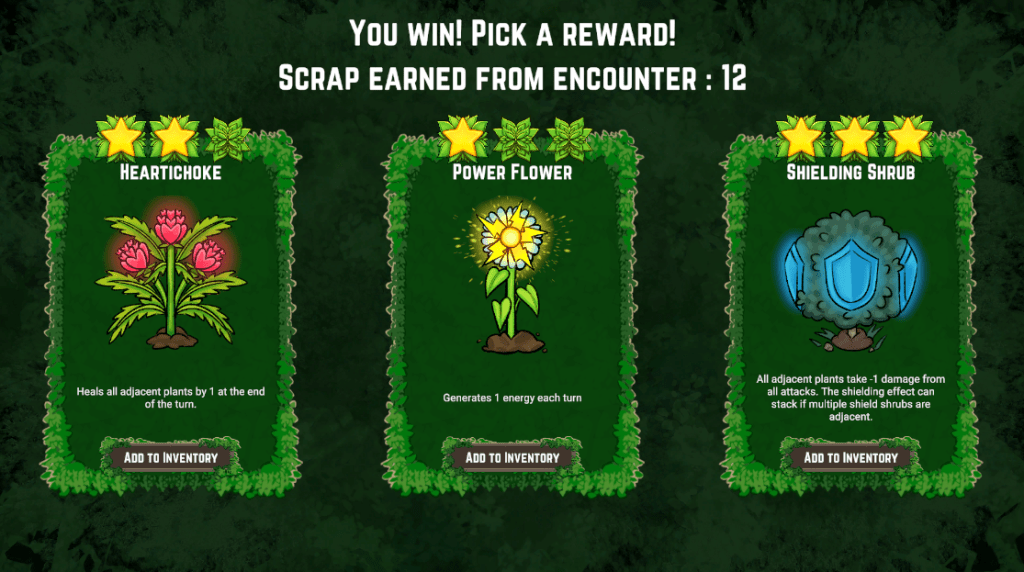
- Designed Post-Combat Reward Distribution System, establishing different plant rarities and ensuring that a plant’s rarity coincided with the complexity of the plant’s effect.
Combat Design
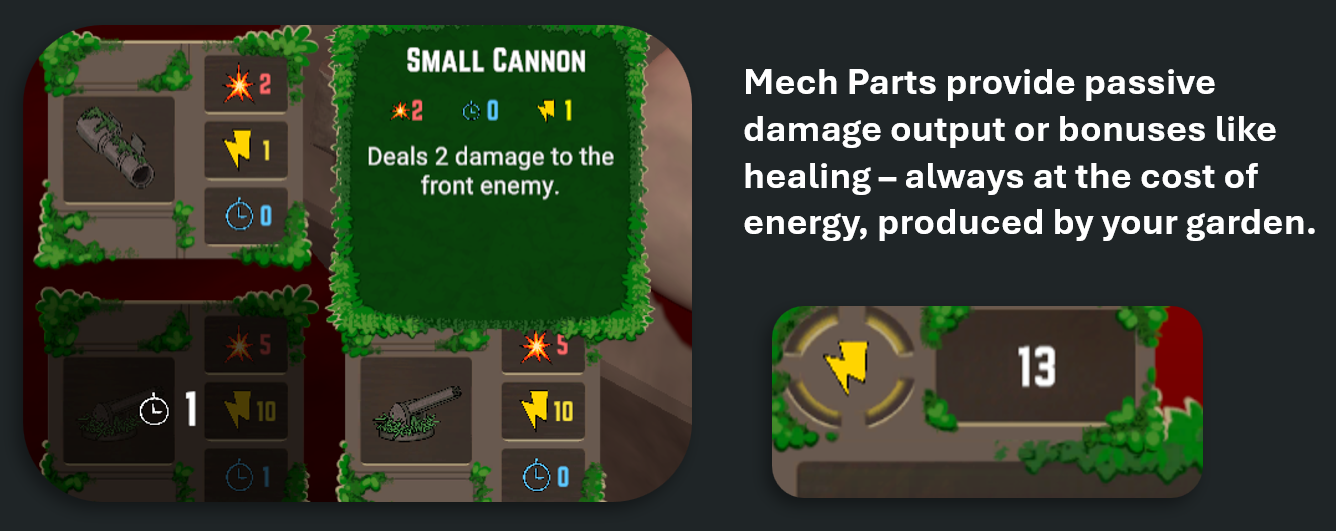
- Designed the mech’s Parts (Weapons & support systems), balancing their effects, damage, cooldowns, and energy cost.
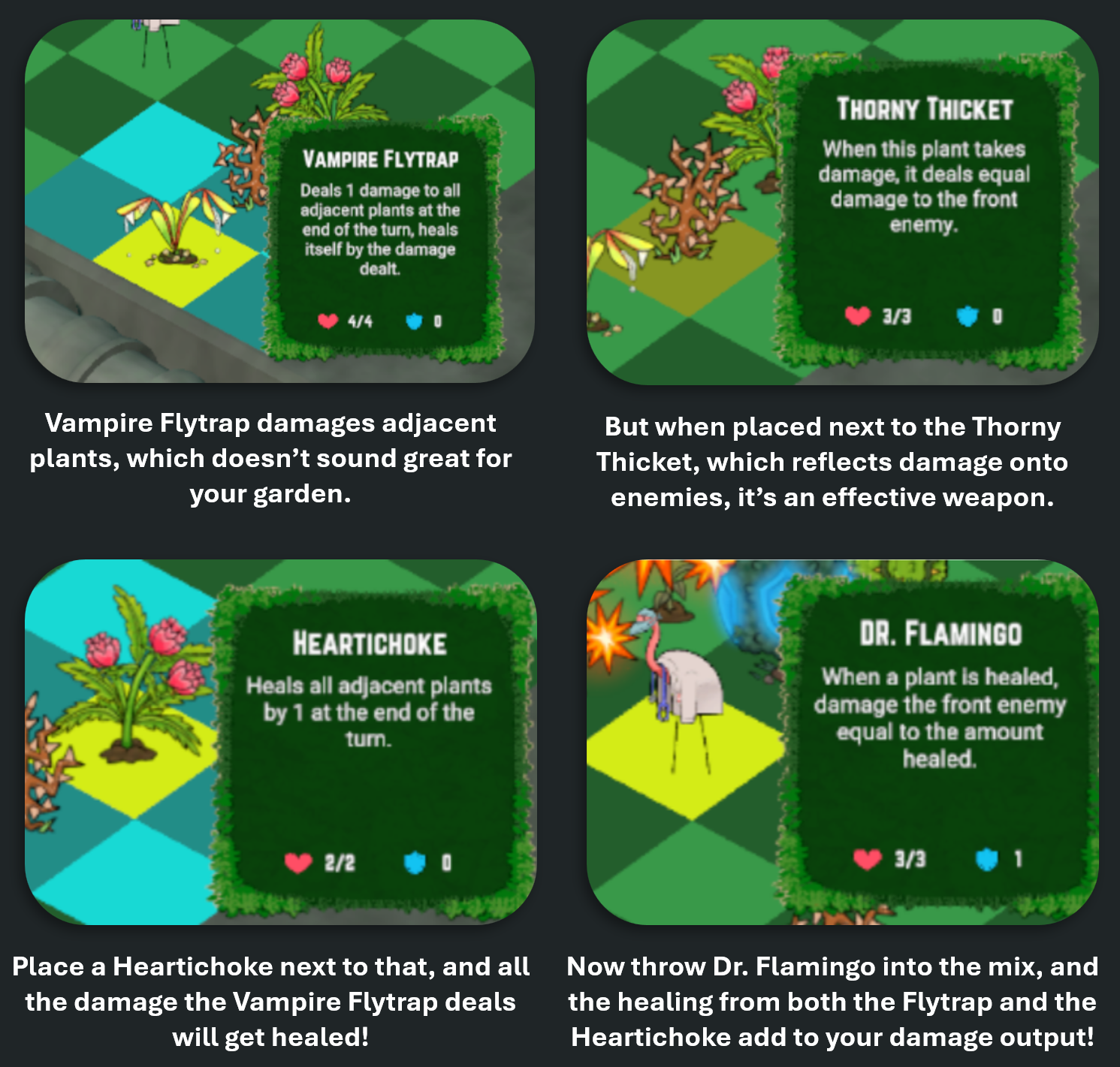
- Designed the plants and artifacts that the player can place in the garden. Gave them effects that synergize with other plants, and balanced their complexity and rarity. For example:
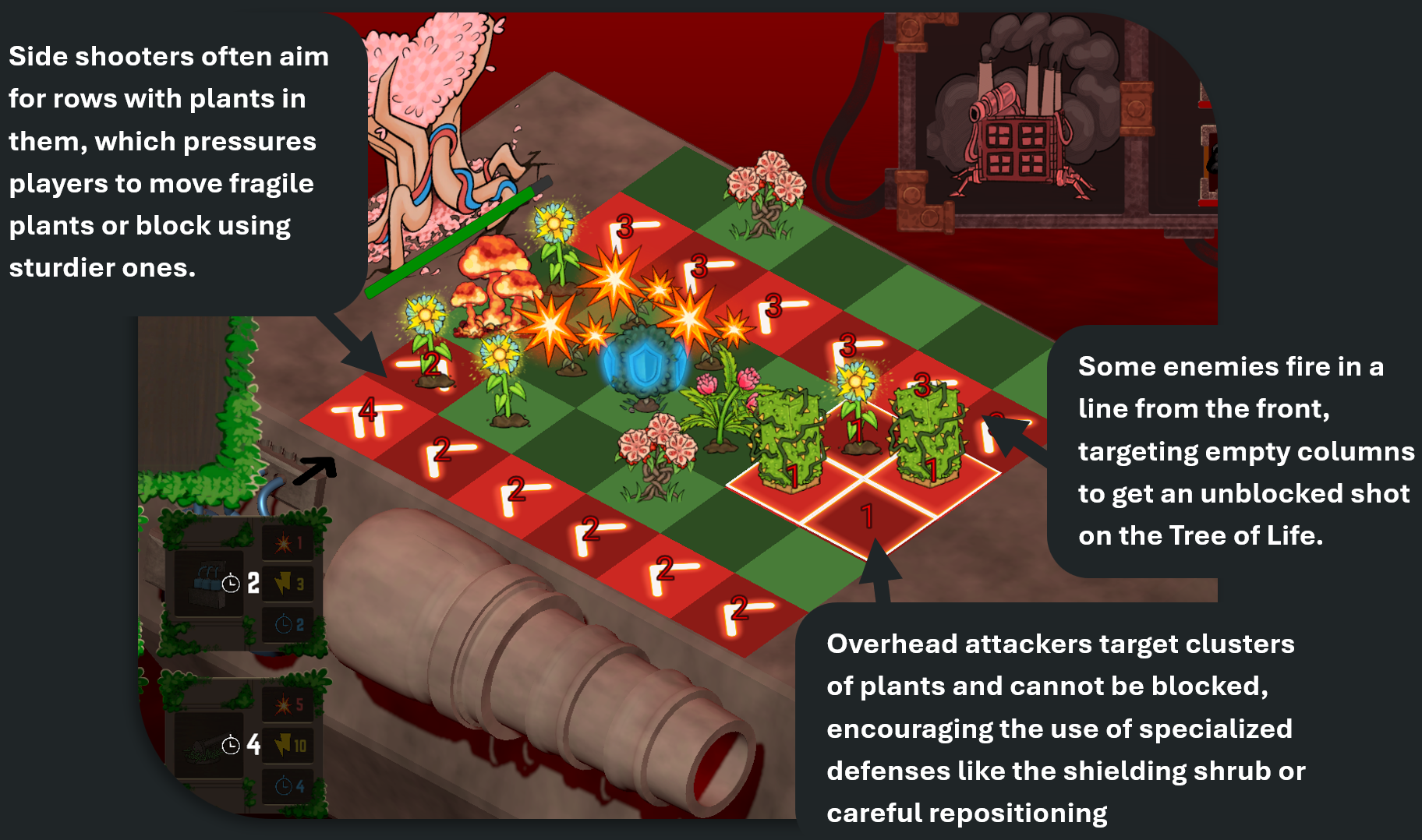
- Designed enemies with different types of attacks, health, and cooldowns, each with specific targeting logic to make the player feel overwhelmed with threats.
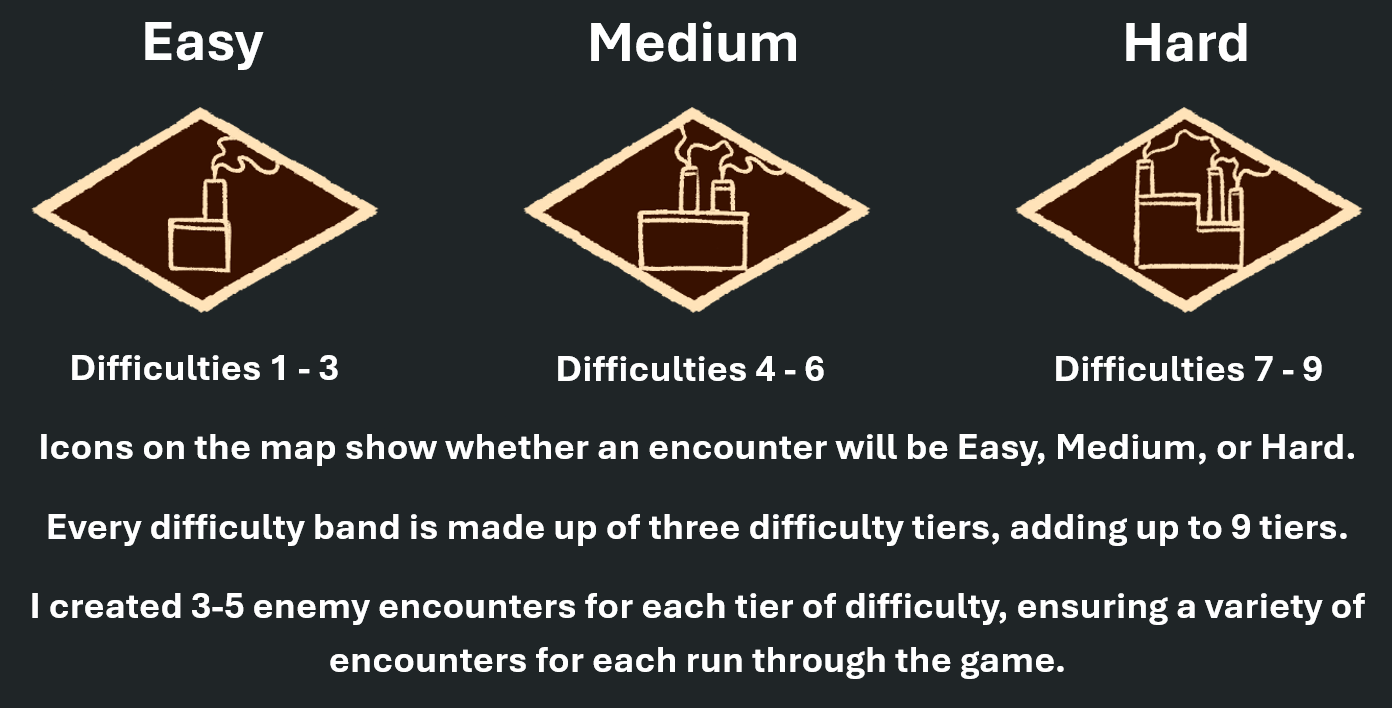
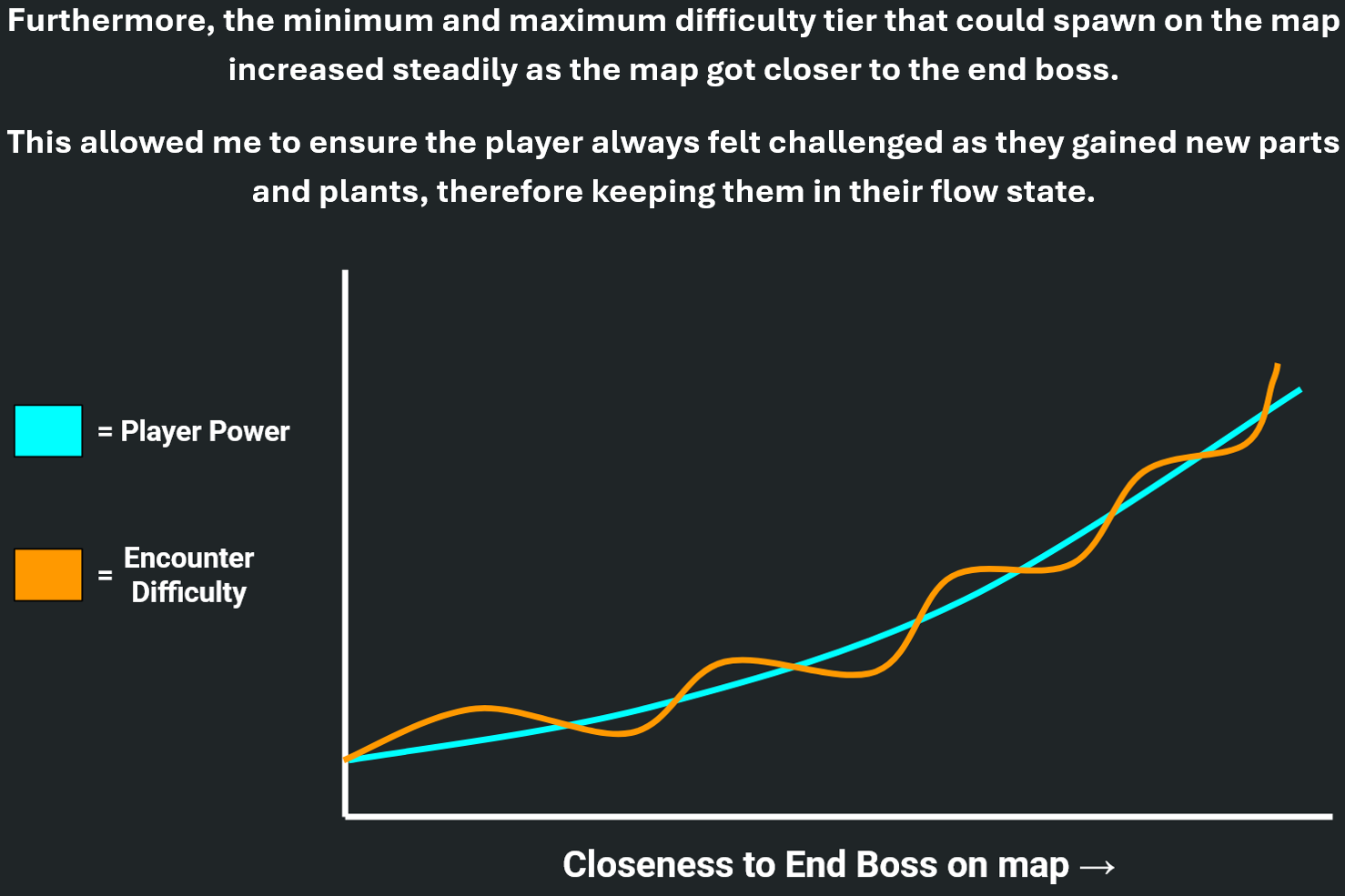
- Created multiple different combat encounters of varying difficulties, to ensure combat difficulty scaled with the player as they got more powerful.
Documentation & Iteration
- Conducted extensive playtesting sessions, gathering and analyzing player feedback to iteratively refine game mechanics and balance.
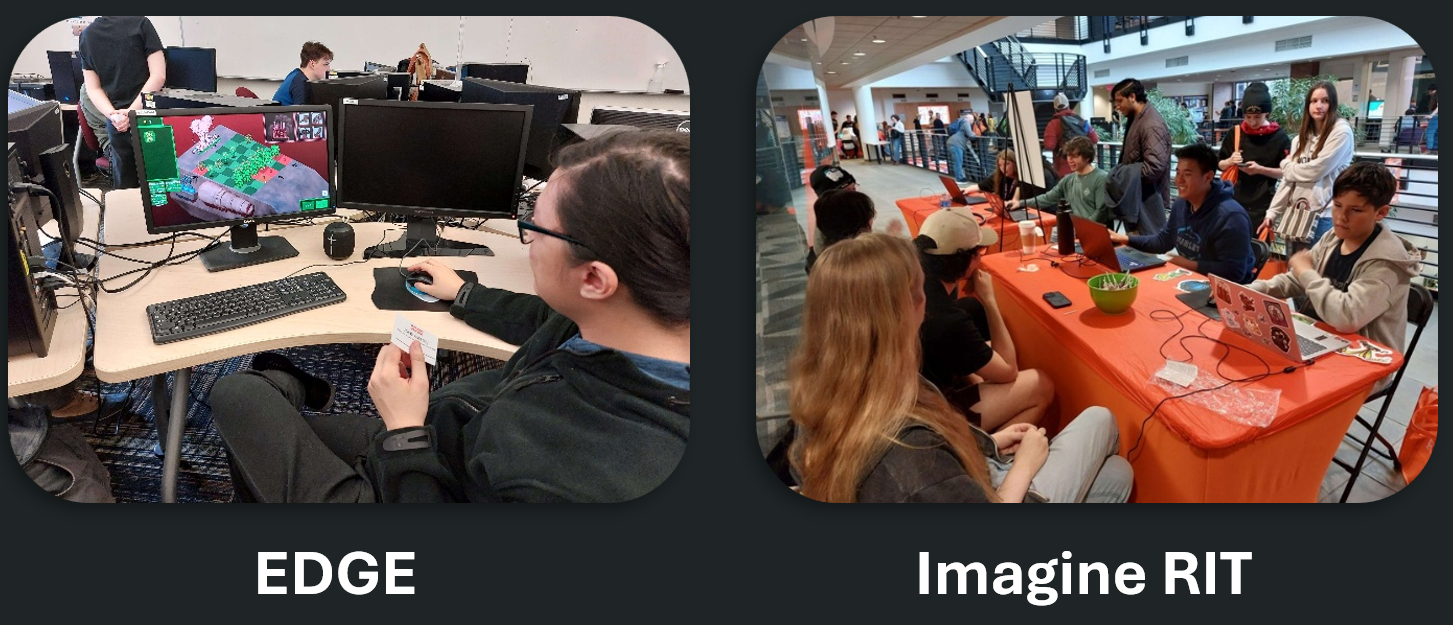
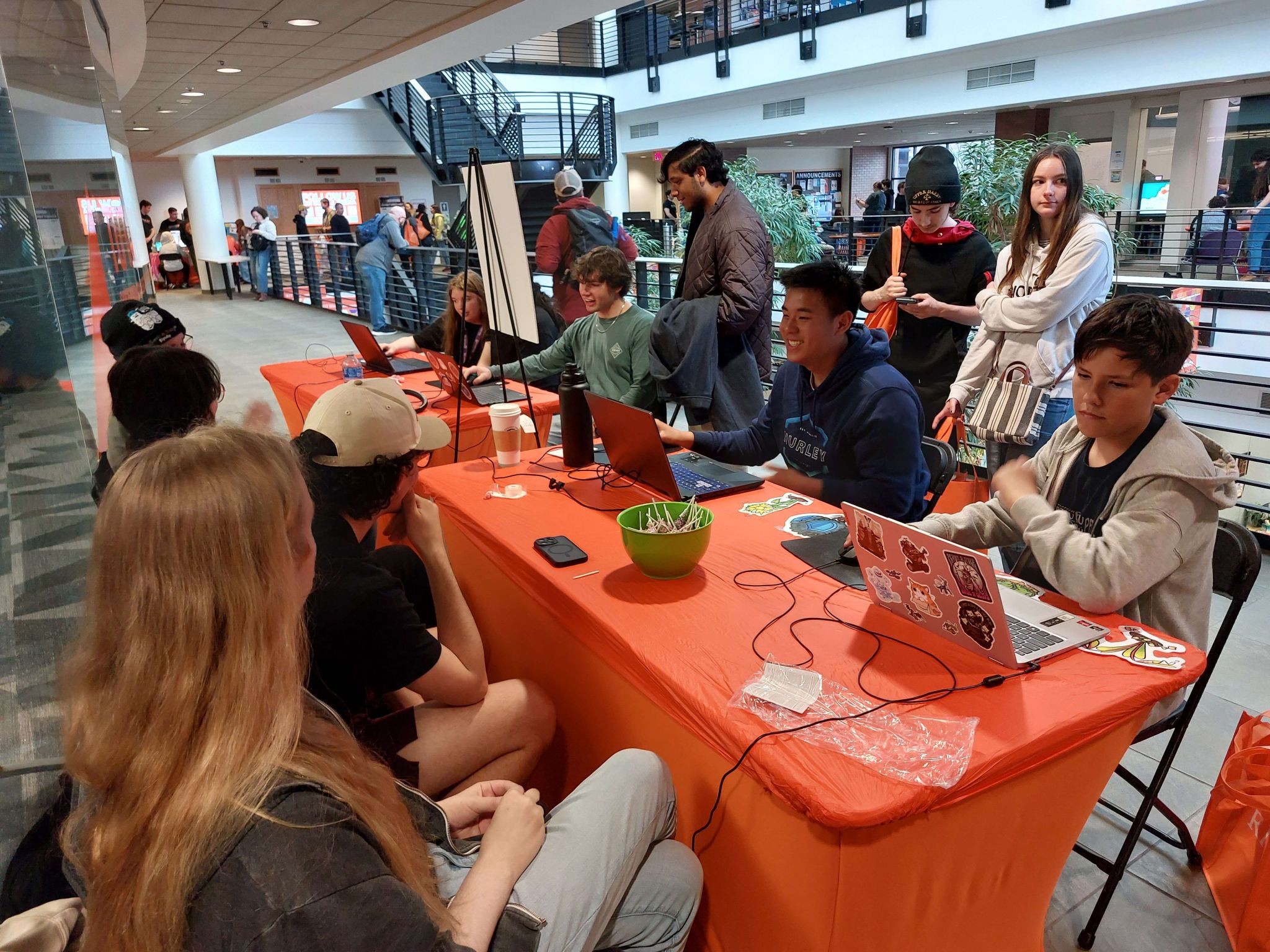
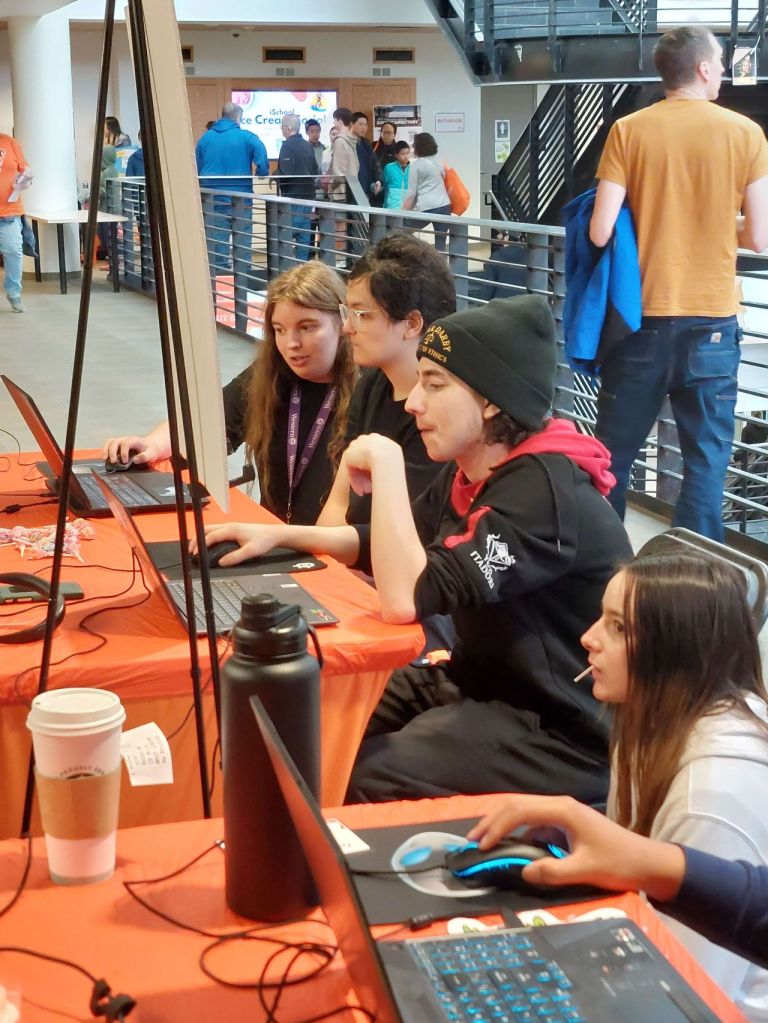
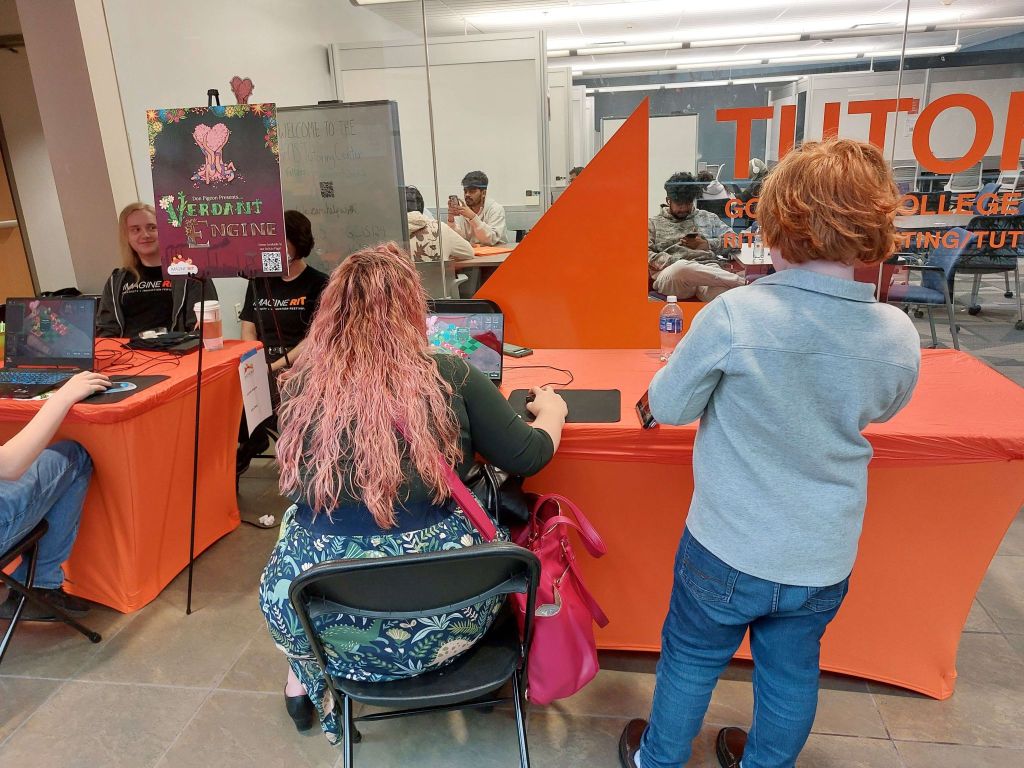
- Organized specialized playtesting sessions with other local game developers at ROC Game Dev; Conducted weekly small-scale public playtests; Participated in large-scale expo & playtest events like the Experiential Development & Games Expo (EDGE) and Imagine RIT.
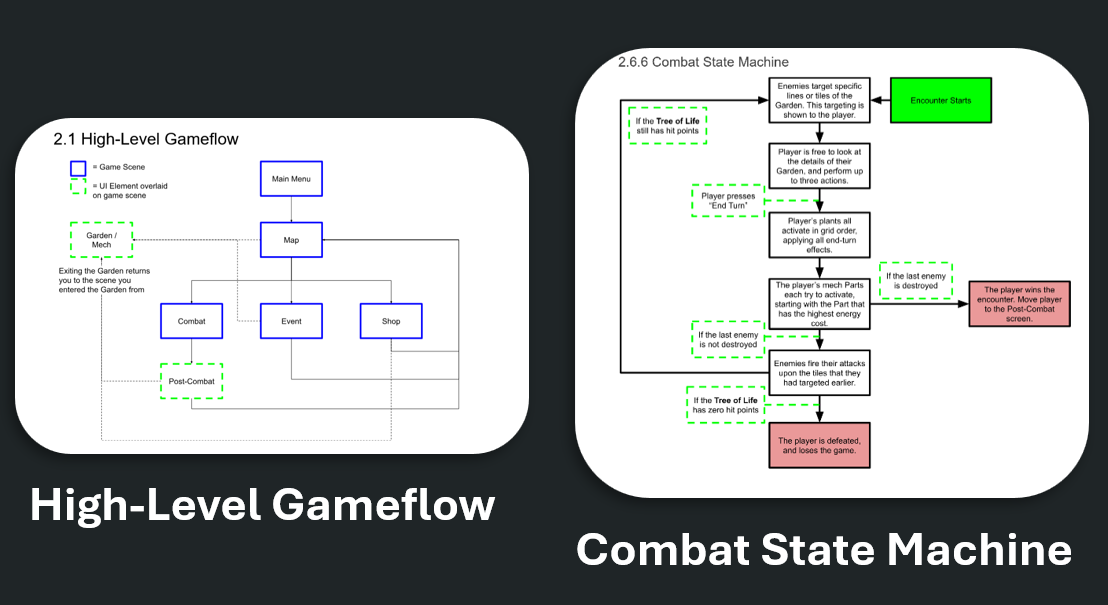
- Developed comprehensive design documentation, including a primary game design document and multiple system flowcharts to guide the development process.
- Collaborated closely with cross-functional team members including artists, programmers, and sound designers, to ensure a cohesive and polished game experience.
Thought Process and Design Challenges
Starting the Design
- The idea came from combining three of our favorite concepts from brainstorming:
- Bio-mech with evolving mutations
- Post-apocalyptic scavengers gaining mutations
- Gardening puzzle strategy roguelike
- I then merged several different elements from each of those ideas with elements from Into the Breach, which I admired as a prime example of “puzzle strategy.”
- The theme came first, but the mechanics naturally grew out of that theme. Once my team locked in on the “garden on a mech” idea, and the concept of strategy roguelike, figuring out what “strategic gardening” would look like pushed me towards adjacency-based mechanics, grid placement, and puzzle-like combat.
The Garden
- Challenge: How active should the player’s interaction with the plants be?
- At first, I considered letting players activate special abilities on plants during combat. Things like hiding or empowering a plant to boost their output.
- However, this made the system overly complex and slowed down the pace.
- Solution: I cut down the player’s interaction to solely be moving plants around the grid and planting new ones.
- The game’s depth comes from where plants are placed, how they interact with neighbors, and whether they are sturdy enough that the player can reposition them to block attacks.
- This change supports that by making plant positioning the primary focus. Plant positioning and synergies already took up enough mental bandwidth – additional actions would only worsen that.
Plant Design & Synergies
- All plants were designed to synergize with other plants, even the seemingly disruptive ones.
- Challenge: Making sure some plants didn’t overwhelm or frustrate players too early.
- Solution: I used rarity as a balancing tool:
- Common plants like Power Flower or Hardy Hedge introduce simple, straightforward effects.
- Uncommon and rare plants like the Vampire Flytrap introduce complex or double-edged synergies. For instance, the Vampire Flytrap damages adjacent plants but heals itself in return.
- By gating plants like this, players first learn the basics of adjacency effects and simple synergies before experimenting with plants that possess more complex synergies later in the run.
Combat & Enemy Design
- Enemy telegraphs are 100% predictable on purpose. The challenge for the player isn’t figuring out what they’ll do, but handling the fact that they’ll often overwhelm the garden with too many simultaneous threats.
- To make the player feel more overwhelmed with threats, I had the enemy weapons use some simple logic to decide what line they would target:
- Enemy weapons attacking from the front tend to target rows that give them a straight shot at the Tree of Life, forcing players to block with plants.
- Side Shooters often aim for lines with plants in them, which pressures players to move fragile plants or block using sturdier ones.
- Overhead attackers like the Smog Ejector usually aim for clusters of plants, encouraging the use of specialized defenses like the Shielding Shrub or careful repositioning.
Map & Progression
- I wanted to ensure the game remained a consistent challenge for the player, and never got too easy or too difficult.
- Solution: I added structured rules to the map generation:
- For one, Map difficulty scales gradually. We have a system where there are 9 “difficulties,” and each difficulty has about three pre-built encounters. We raise the min and max difficulties of the encounters that appear on the map steadily as the player goes higher on the map – ensuring that the player keeps feeling challenged as they go through the map, gaining new and more powerful plants and weapons.
- Additionally, we ensured certain elements would spawn on the map at certain rows:
- Row 1 was always a difficulty 1 combat encounter.
- Events were only able to spawn starting at Row 2.
- A shop is guaranteed to spawn at Row 4, and shops only start spawning on the map after that. This ensures the player has some currency to spend at the first shop they get to.
 Sebastian Bolatto's Portfolio