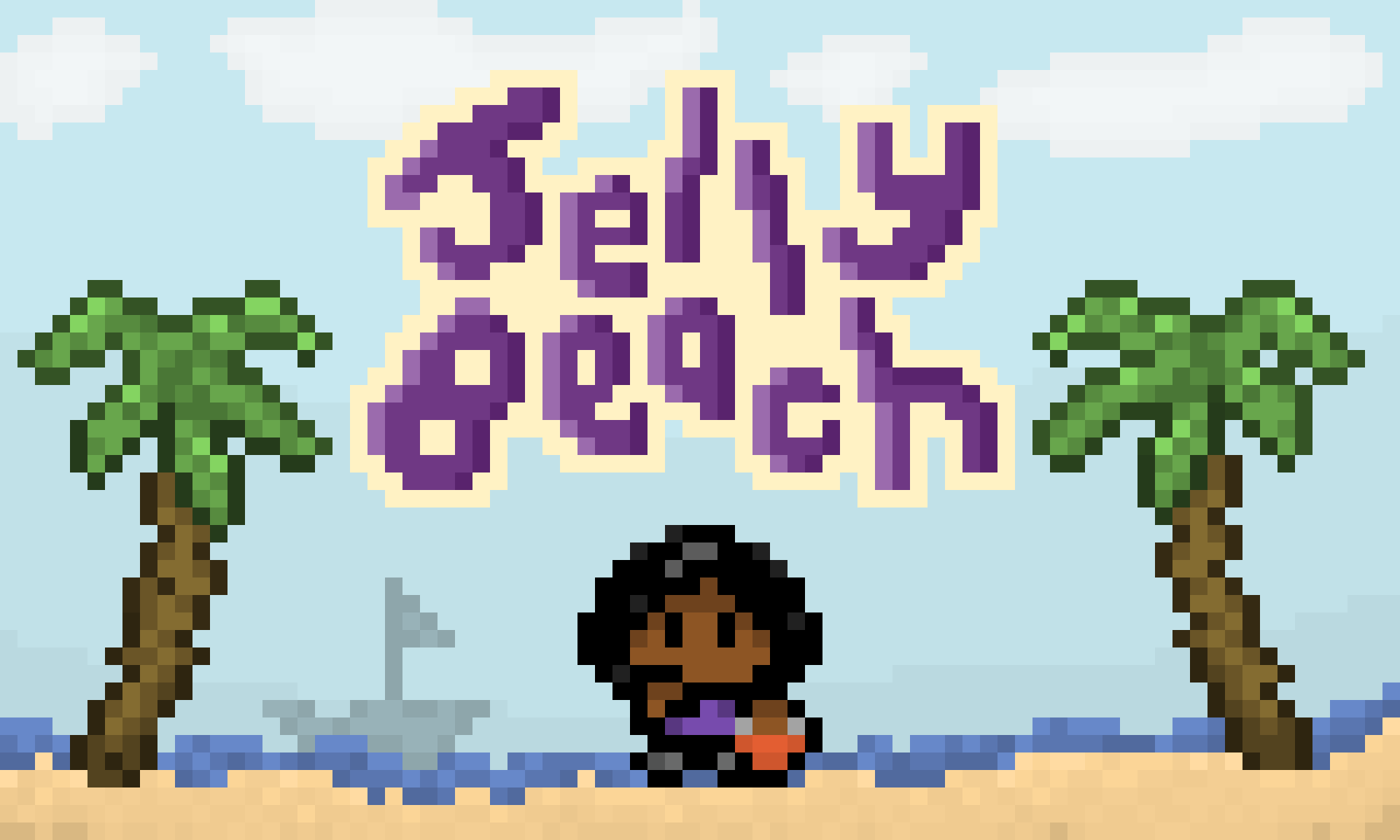
A whimsical 2D trading and exploration game about childhood joy, independence, and the pursuit of a jelly donut.
Play the game by clicking here!
Project Overview
Jelly Beach is a short 2D pixel-art narrative game developed as part of the Echoes VIP program at the Rochester Institute of Technology. Inspired by John Roche’s poem “Ode to a Jelly Donut,” the game captures the childlike wonder of exploring a lively 1960s-inspired boardwalk, meeting quirky NPCs, and piecing together a chain of item trades, all leading toward the ultimate goal: earning a jelly donut.
The game emphasizes joy, independence, and nostalgia, and uses image-based dialogue and environmental storytelling to guide players without text.

My Contributions
Dialog System Planning
One of Jelly Beach’s core design challenges was creating a wordless dialogue system that uses simple images to express NPC needs and reinforce the game’s themes of childlike imagination. I helped with:
- Early planning and system design for conveying story beats and trading logic entirely through images.
- Ensuring the system remained readable, consistent, and intuitive, even as we added more complex NPC conversations.
- Creating tools for easily creating new NPC conversations with new images.
The result was a unique communication system that aligns with the team’s pillars of Joy and Nostalgia, while enabling players of all ages and languages to understand the trading loop.

Camera System Development
I was responsible for designing and implementing the camera system, which needed to support:
- A top-down exploration perspective that feels smooth and readable.
- Consistent framing across multiple distinct areas including the house interior, boardwalk, beach, and jelly shop.
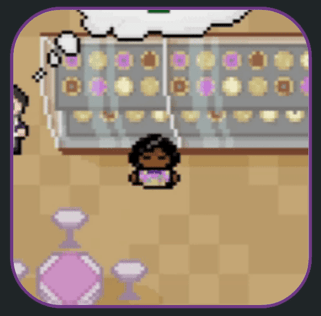
- Smooth zoom-ins and movement adjustments when the player is interacting with NPCs. The camera automatically frames the player, NPC, and dialogue to ensure they all fit well within the player’s viewport.
I achieved this by using Unity’s cinemachine system along with custom scripts to ensure the camera’s movement felt smooth and polished.
Bug Fixing & Systems Polish
Over the course of the semester, I resolved dozens of issues across the project, including:
- Collision inconsistencies in the house, shop, beach, and boardwalk areas.
- Visual bugs in UI elements such as inventory transitions.
- Player movement edge cases, including fixes to issues with diagonal movement.
- Minor scripting issues involving item handoff, animation transitions, and teleportation triggers.
These fixes were essential for transforming Jelly Beach from an early prototype into a smooth playable experience.
Throughout its period of development our team prioritized frequent playtesting, and the game benefited greatly from iterative feedback; especially around readability, onboarding, and environmental clarity. Many of my bug fixes and camera refinements directly addressed usability problems discovered in these sessions.
Play the Game
Use one of the links below to play the game yourself!
GitHub Pages Build: https://rit-vip-echoes.github.io/Jelly-Beach/
Echoes VIP Project Page: https://www.echoes-vip.org/themes/interactive-chapbooks/jelly-beach
 Sebastian Bolatto's Portfolio